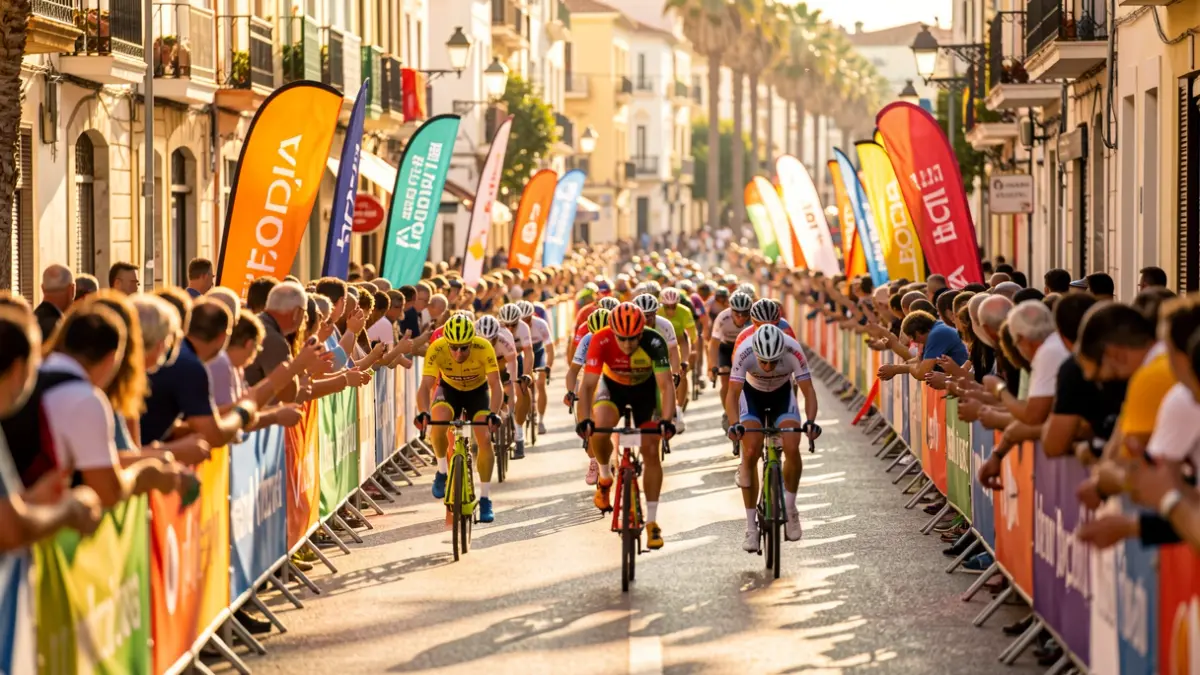
Tarragona's tourism sector is eagerly awaiting the upcoming start of the second stage of the Tour de France next Sunday. Industry professionals highlight the event's potential for the city's international projection and image enhancement. However, there is a tendency to downplay the direct economic impact, as hotels are already operating at full capacity during the high season.
The Business Federation of Hospitality and Tourism of Tarragona (FEHT) considers the event an "excellent piece of news" that places the city "on the international map." President Berta Cabré notes that the visibility provided by the Tour can generate "future opportunities" and help de-seasonalize tourism by linking the region with sports. The Association of Hospitality Business Owners of Tarragona City (AEH), chaired by Javier Escribano, also positively values the global media presence, although he is skeptical about a significant increase in turnover on the race day.
Key arguments for this skepticism include the fact that the cycling teams will only be in Tarragona for the start, with previous and subsequent stays in Barcelona. Furthermore, activity is expected to be concentrated in the morning, limiting the impact on restaurants. Doubts are also raised about the crowd size in the city center, anticipating that many fans will position themselves on the outskirts to watch the cyclists pass.
Both Cabré and Escribano agree that the economic impact would be more significant if the event were held during the low season. Currently, with Tarragona full of tourists in July, the arrival of additional visitors might not lead to a substantial increase in hotel occupancy, although a slight improvement is anticipated, which can only be assessed a few days after the race.
From the Tarragona City Council, the Sports Councilor, Mario Soler, expresses great enthusiasm, anticipating that the event "will exceed expectations" and put the city "in the global spotlight." The council estimates an attendance of between 60,000 and 80,000 people on the streets, including residents and visitors. Soler predicts a "huge economic impact" for shops and hotels, estimating a repercussion of approximately 1.5 million euros, similar to other sporting events organized at the Anella Mediterrània. He also highlights the social impact and the city pride generated by the event.
The organization expects the event's hub to be at Parc del Francolí, from where the cyclists will complete about six kilometers through the city center before heading towards Altafulla via the N-340. The city council will conduct an economic impact study after the race concludes.