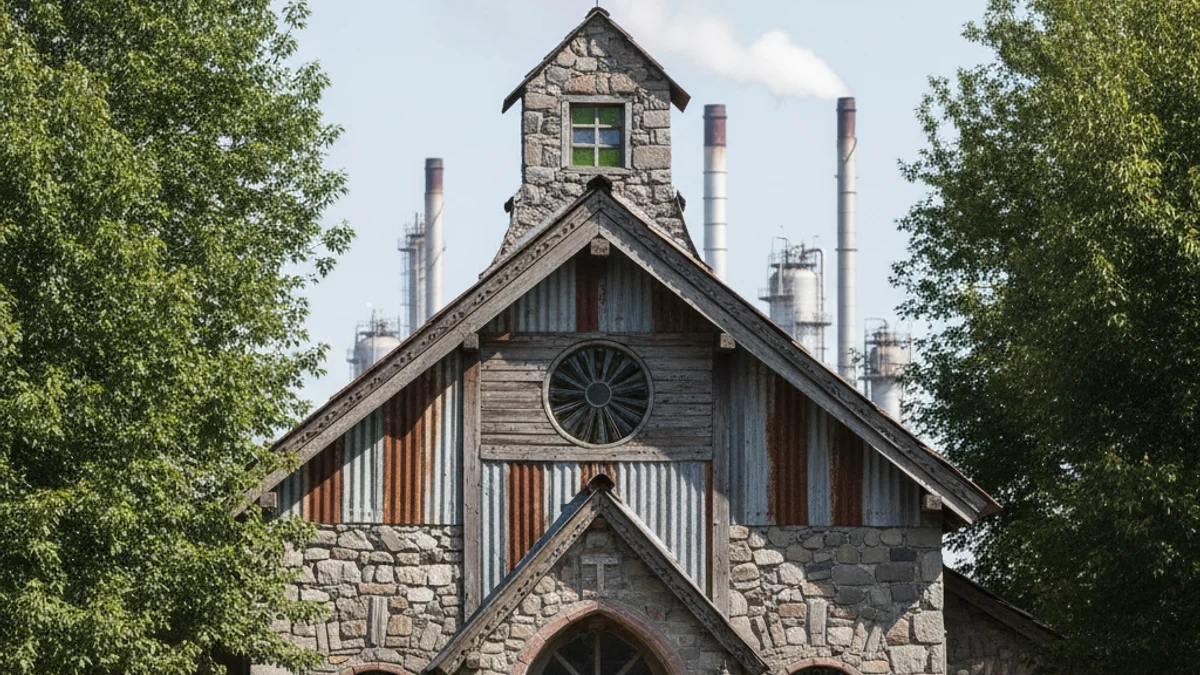
The temple, located in Vistabella, a small village in the Tarragonès region, is situated in a wooded area that acts as a visual and landscape refuge from the Repsol refinery. This area, historically fertile and colonized by the Romans, now hosts the largest petrochemical cluster in southern Europe, contrasting sharply with the unique work of Jujol.
Neighboring towns such as La Secuita, La Pobla, El Morell, Puigdelfí, and Perafort have seen their surroundings encroached upon by industrial infrastructure, creating a landscape that the chronicle's author compares to a dystopian setting, evoking the film Blade Runner.
Here in the middle, in this weary point of the territory stands Jujol, with his dreams transformed into architecture.
Jujol's architecture in Vistabella stands out for its philosophy of proximity and the reuse of humble materials. The artist transformed everyday objects like cans into lamps, ploughshares into chrismons, and a sprayer into a tabernacle, using stones and scraps to create unique furniture and structure.
This “casket of beauty” remains standing, resisting years of indifference and the speed of a present that moves contrary to poetry and craftsmanship. The church rises as an alert testimony and a sanctuary for those seeking the fragile flame of Art.