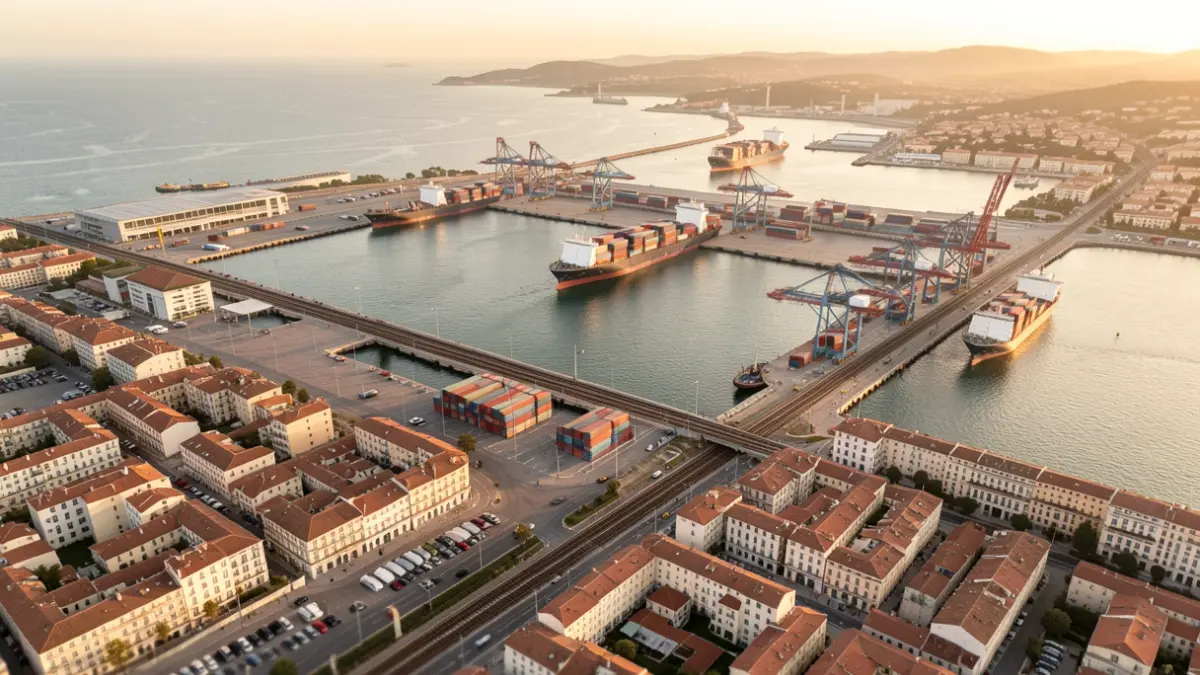
The race to host the future artificial intelligence gigafactory in Móra la Nova is advancing its timeline. Minister of the Presidency, Albert Dalmau, announced on Friday in Tarragona that the European Commission will open the candidacy submission process before summer. Dalmau assured that the project promoted from Catalonia arrives "with its homework done" and with the explicit goal of winning the European competition.
"We have made this bid to win it," stated Dalmau during the presentation of the Business Excellence Guide of Tarragona. The Government's forecast is to present the definitive project of the consortium that will lead the Iberian bid "shortly" and begin construction "in the second quarter of 2027," with the intention of having the infrastructure operational "by the end of 2028".
Dalmau highlighted the solidity of the Catalan proposal to prevail in the European competition, avoiding the fragmentation of bids within Spain. The consortium will be formed by companies such as Telefónica, ACS, MasOrange, Nvidia, Submer, Multiverse Computing, and SETT, with the support of the Spanish Government and the active participation of the Generalitat de Catalunya and Banco Santander.
The minister emphasized the strategic importance of the gigafactory for Catalonia and the Terres de l'Ebre region, seeking a territorial distribution of key infrastructure. The initiative aims to strengthen European strategic autonomy against the United States and China, positioning Catalonia as a creator and not just a consumer of technology.
The infrastructure is conceived as an engine for an economic and technological ecosystem, with the creation of a "social council" to connect the gigafactory with local companies, suppliers, and universities, including the petrochemical hub and the URV. The goal is for both large and small and medium-sized enterprises to use it for developing advanced artificial intelligence applications.
Dalmau highlighted the speed of the urban planning project in Móra la Nova and reflected on the social and political implications of artificial intelligence, advocating for technological development that reinforces democratic and social values, and serves to generate shared opportunities.
He also defended the use of AI in administration to reduce bureaucracy, always with "human supervision" and an "ethical vision." The minister concluded by reflecting on the effectiveness of democracy in solving problems, despite the need to streamline processes to face challenges like this.