The European Night of Research returns to the Tarragona region with nearly a hundred activities designed to bring science closer to the public. The event, now in its ninth edition, involves over 300 researchers from the Universitat Rovira i Virgili (URV) and local CERCA research centers, including ICAC, ICIQ, IPHES-CERCA, and IRBCatSud. This European initiative is supported by the European Union.
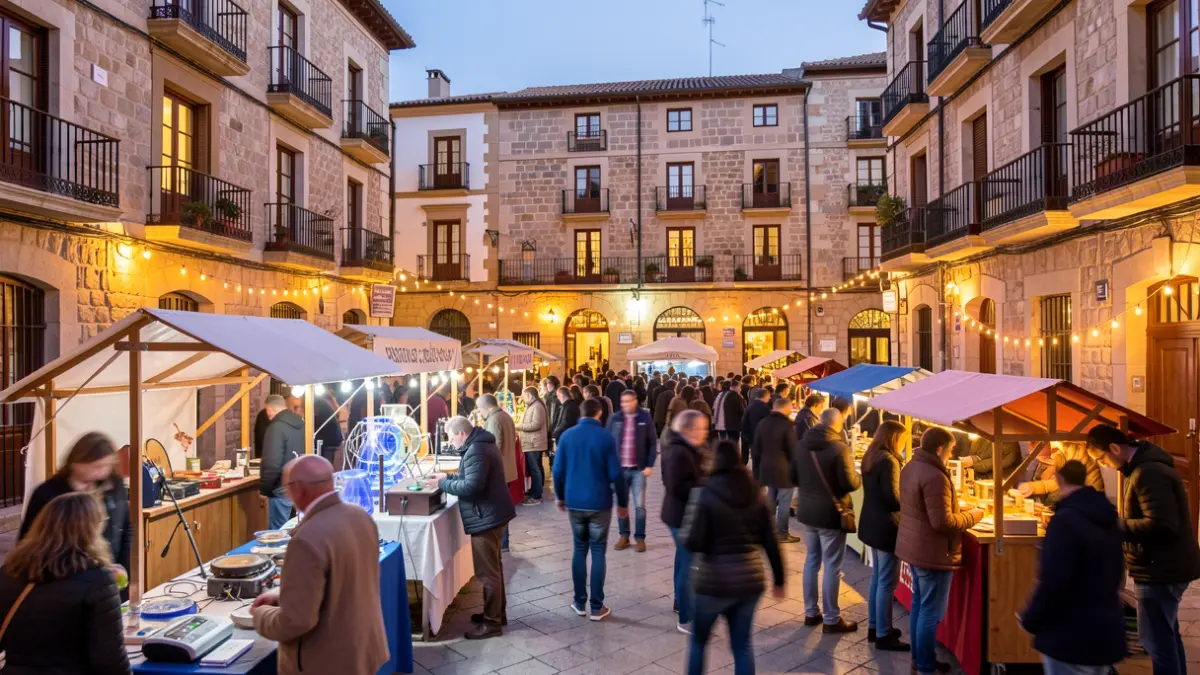
Tarragona's Plaça Corsini will be the main venue for the science workshop fair, taking place on Friday, September 25th, and Saturday, September 26th. Over 50 experimental workshops across various scientific disciplines will be offered in a fun and accessible way for all audiences. Children will receive a science passport to get stamped at each workshop and receive a small gift, aiming to spark their curiosity through experimentation guided by researchers.
Preceding activities include the exhibition “Castells de ciència” (Science Castles) at the Mercat Central de Tarragona, running until October 20th, exploring the connection between the 'casteller' tradition and various scientific disciplines. On Tuesday, September 16th, the second issue of the science outreach magazine “Mirades de ciència” (Science Views) will be presented at the Antic Ajuntament de Tarragona (Old Town Hall).
Until September 24th, researchers from the URV and research institutes will visit secondary schools to give talks and workshops on topics such as artificial intelligence, archaeology, and 3D printing. Additionally, on Monday, September 21st, the Castell del Cambrer in Reus will host a session of short outreach talks for adults.
The European Night of Research also extends to the Terres de l'Ebre region, with a science workshop fair on Friday, October 2nd, at the Plaça de l'Ajuntament (Town Hall Square) in Amposta, offering about ten proposals on viruses, sports, aquatic plants, languages, and entrepreneurship.
This established event, held simultaneously in 300 European cities, aims to bring research and its protagonists closer to all audiences. The initiative is supported by the European Union's Horizon Europe program, the Catalan university consortium, and sponsorship from the Tarragona City Council, Mercats Tarragona, Borges, and Port Aventura World.