The practice of jumping from rocks into the sea, which is prohibited and policed, persists near the beaches of Tarragona. The recent deaths of three minors aged 12 and 13, who drowned near one of the jumping points under circumstances yet to be clarified, have refocused attention on this activity that has caused multiple serious and fatal accidents over the last 15 years.
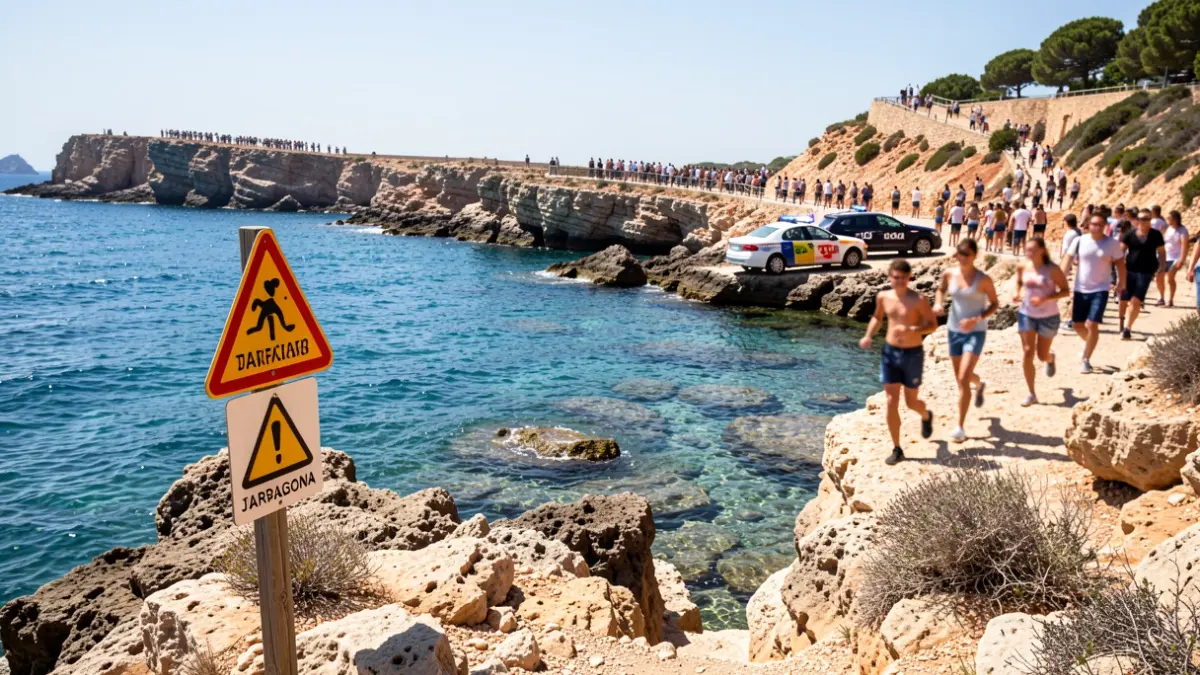
The two most frequent jumping spots, fully identified by police and lifeguards, are under constant surveillance by the Guardia Urbana, with the Beach Surveillance Unit and its four pairs of officers patrolling the 15 kilometers of coastline. Despite daily monitoring, police pressure has not managed to eradicate this practice, which is particularly ingrained among groups of teenagers and young adults.
Officers explain that the groups, sometimes up to 15 youths, flee when they detect police presence. Many are minors who, away from their parents' eyes and in secluded areas, are aware of the prohibition and potential fines. Warning signs and barriers to restricted areas often suffer vandalism.
In some instances, jumpers have resorted to throwing stones at lifeguards from the Red Cross, who also conduct sea surveillance and alert the Guardia Urbana. The youths seem to have the upper hand in this cat-and-mouse game along the kilometers of beaches, as officers rarely initiate rock pursuits to avoid further danger.
On calm sea days, the jumping spots may appear harmless, but currents and waves can turn them into a deadly trap. An officer points to the Cova del Gos, one of the locations where one of the drowned children was rescued on June 19th, noting that swimming out is impossible in rough seas. Flowers on the rocks commemorate the three victims.
Another busy spot is located behind the Fortí de la Reina, near Miracle beach. The rock height exceeds five meters, and it was here that a German tourist drowned on March 28, 2024, while trying to save a minor who had jumped. The case of a young man who became tetraplegic last year after hitting the sand while head-first jumping is also recalled, highlighting the severe risks of variable depths.
Despite the accidents, police actions and fines are the only tangible indicators of the problem. According to the Tarragona Guardia Urbana, 65 interventions and 20 fines for "rock jumping" were recorded in 2025. In the first weeks of the 2026 summer campaign, one intervention and four fines for disobedience have been registered.
Accident prevention relies on swimmers' self-protection, education, and awareness, complemented by police pressure and fines, to deter jumpers even when media attention wanes.