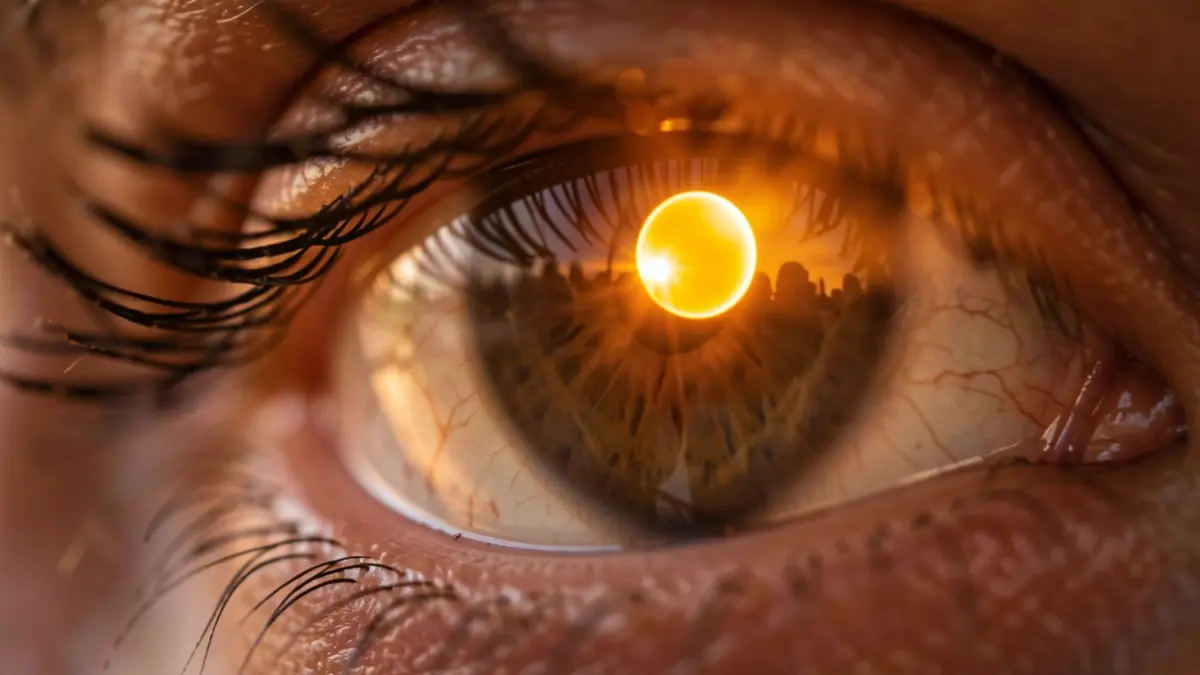
Following the solar eclipse that captivated thousands across Catalonia, the healthcare system has attended approximately 450 ophthalmological emergencies in the past two days. These consultations accounted for between 2% and 3% of the total activity in hospital emergencies and primary care centers (CAPs).
The Emergency Medical System (SEM) received 115 calls and attended to 109 individuals for eclipse-related incidents. Ten people required an ambulance, and six were transported to healthcare facilities, one of them in critical condition with trauma.
The Department of Health warns that eye symptoms, such as blurred vision or visual spots, may appear hours or days after observation. Although current data does not indicate a wave of severe injuries, consulting an ophthalmologist is recommended for any vision changes.
Solar retinopathy, caused by intense sunlight without adequate protection, can damage the retina and macula. Symptoms, which are not painful, may include blurred vision, dark spots, or distortions in color perception and straight lines, typically appearing one to four hours after exposure.
The manager of the health region of Terres de l'Ebre, Ferran Roche, confirmed that the day was generally calm and many discomforts were resolved by phone. The public healthcare system responded "satisfactorily" to the increased demand thanks to a preventive deployment.
On the day of the eclipse, 17,216 emergencies were recorded throughout Catalonia, a 12.2% increase compared to the previous week, with significant rises in Terres de l'Ebre (+27.9%) and Camp de Tarragona (+24.2%), figures within expected ranges.