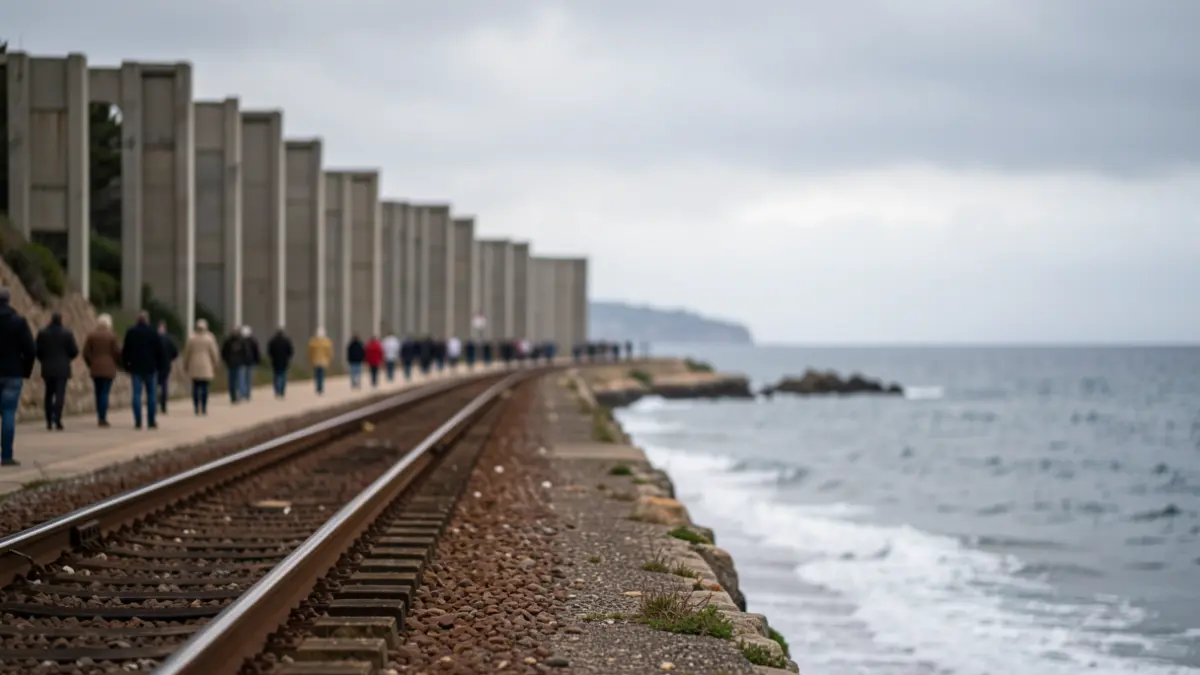
All 27 municipal representatives, including the governing PSC party, voted in favor of a motion opposing these railway structures that would affect almost the entire track layout as it passes through the city.
Mayor Rubén Viñuales has described the barriers as a "disaster" and stated they "will not happen." The motion, jointly defended by ERC and Junts per Catalunya, proposes alternative measures such as barriers less than 1.5 meters high attached to the track or technological solutions to mitigate noise.
The municipal government explained that, following meetings with Adif and affected municipalities, a "closer" alternative has been proposed, although it does not fully satisfy local demands. Councillor for Territory, Nacho García Latorre, emphasized that "there will be no acoustic barriers in Tarragona without prior consensus from the City Council."
The definitive solution, according to the parties, involves diverting freight trains inland. Therefore, they urge the Ministry of Transport to conduct a study for a segregated railway line that minimizes contact with populated areas.
ERC spokesperson Xavier Puig celebrated the parties' unity and criticized the barriers as "a real kick in the teeth to our identity and the dream of opening ourselves to the sea." Meanwhile, Junts per Catalunya, through Jordi Sendra, considered the barriers "a direct aggression to the landscape and World Heritage," especially near the Amphitheatre.
En Comú Podem lamented that discussing freight trains alongside the barriers might create more difficulties than opportunities. Finally, Maria Mercè Martorell (PP) reproached the mayor for not pressuring his party colleagues more to divert freight trains.