A short distance from the Costa Dorada, the Prades Mountains stand as a climatic refuge where water has sculpted over centuries a series of pools, waterfalls, and ravines, forming one of the most distinctive natural environments in inland Catalonia.
This territory, still in the processing phase, will become the future Natural Park of Les Muntanyes de Prades, Poblet, and the Serra de la Llena. This protection status will cover 22 municipalities across five counties, making it the third-largest natural park in Catalonia. The project includes emblematic areas such as the cliffs of Siurana, the village of Prades, the valleys of the Brugent and Glorieta rivers, and the Avencs de la Febró caves.
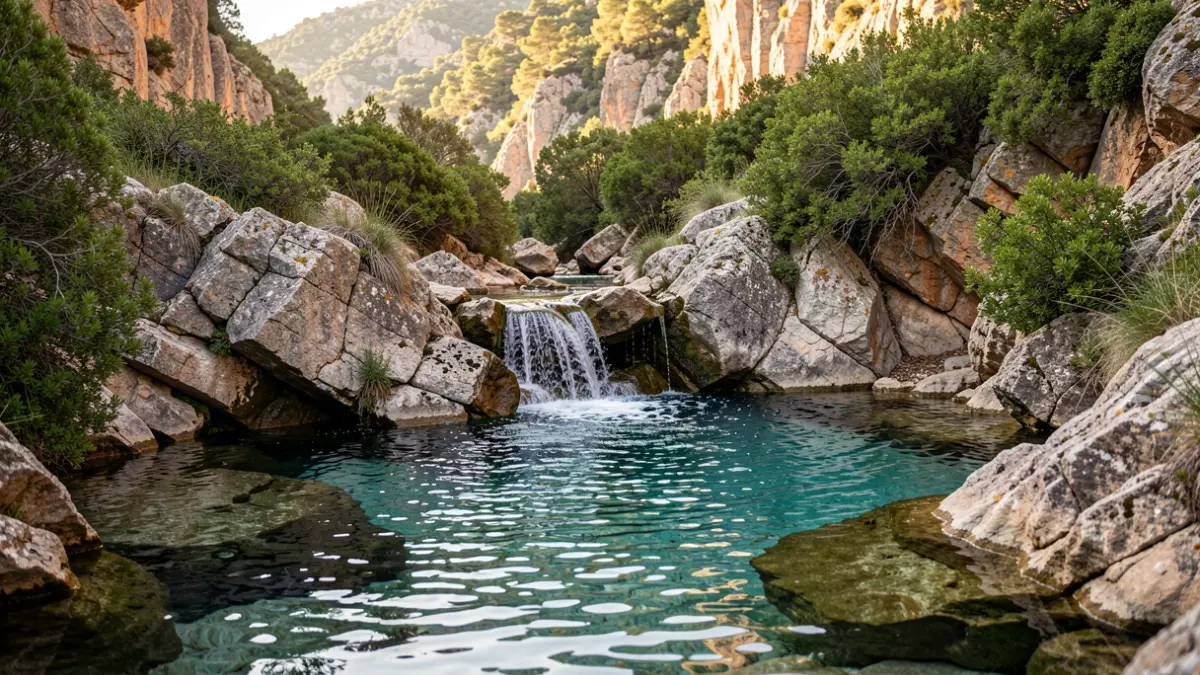
The area's geological complexity, with layers of slate, sandstone, and limestone, combined with the action of the rivers, has created natural pools locally known as 'tolls' and 'gorgs'. These riverine areas with clear waters, surrounded by riparian vegetation, are a significant attraction during the summer months.
Water erosion has shaped natural basins and waterfalls, particularly around the Glorieta River, where old industrial facilities like the Mas de Forès coexist with hiking trails and bathing areas such as the Niu de l’Àliga. The Brugent River also offers notable spots like the Toll de l’Olla, while the Barranc del Gorg ravine features more secluded and forested areas.
These sites attract an increasing number of visitors due to their natural character and proximity to the coast. The future declaration as a natural park aims to ensure the conservation of these fragile ecosystems, which host native species and valuable geological formations.
Administrations are evaluating methods to regulate access to balance public use with environmental protection. Current recommendations include avoiding the use of sunscreen while swimming, respecting flora and fauna, and not leaving waste in the natural environment.
The Prades Mountains are thus consolidating as one of the major riverine landscapes in southern Catalonia, a territory where water, rock, and forest form a natural mosaic that could receive definitive protection in the coming years.