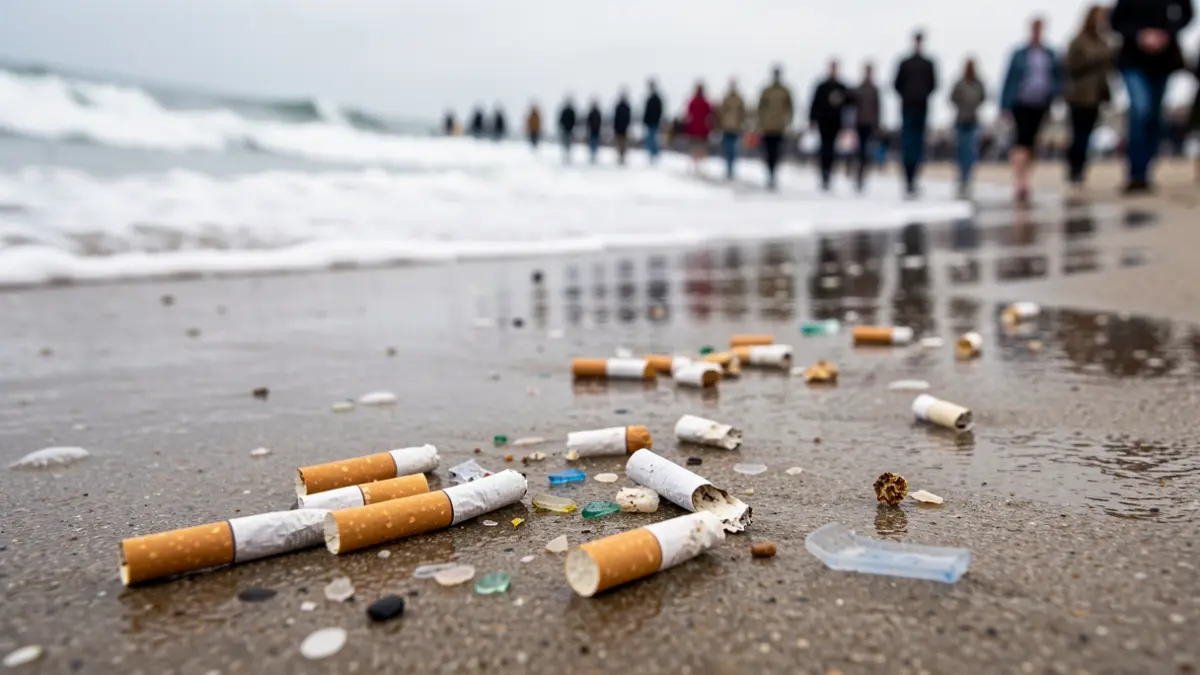
A total of 2,115 cigarette butts, 818 small plastic pieces under 2.5 centimeters, and 441 fragments between 2.5 and 50 centimeters have been collected from the beaches of the Costa Daurada. These figures correspond to actions carried out between October 10, 2025, and July 1 of this year on beaches such as La Llosa and El Regueral (Cambrils), La Pineda, La Llarga (Salou), El Miracle (Tarragona), and La Pixerota (Mont-roig del Camp).
According to statistics from the organization Good Karma Projects, the most abundant waste on the shores are plastics, representing 75.6% of the total, followed by paper (5.7%). In total, 5,458 objects were found on the Tarragona coastline.
The catalog of identified waste includes fragments of paraffin and wax, bags, wrappers, caps, wet wipes, and cotton swabs, many of which originate from streams and drains. Cigarette butts are particularly notable, despite the trend towards creating smoke-free zones on beaches. A single cigarette butt can contaminate up to 50 liters of water and takes over 10 years to degrade.
The organization notes that municipalities like Altafulla are joining the trend of smoke-free beaches, with ordinances that include fines, such as the 600 euros in Vila-seca. However, a significant portion of cigarette waste reaches the shores through urban sewage systems.
By material, after plastic (4,126 objects) and paper and cardboard (309), hygienic waste (217) and metal (173) are the most common.
Good Karma Projects, a non-profit organization, generates these statistics through its citizen science project Clean Up With Karma. The entity emphasizes that it is an opportunity to reflect on the impact of daily actions and individual responsibility.
The collected data will be sent to the Ministry for Ecological Transition and the European Environment Agency. Furthermore, the findings help alert authorities about spills and problem areas.
This summer, several municipalities in the area are introducing advanced machinery for beach cleaning. La Pineda is using a machine for pellets, Salou a vehicle for capturing metallic waste, and Altafulla will incorporate a self-propelled electric machine to complement manual cleaning.