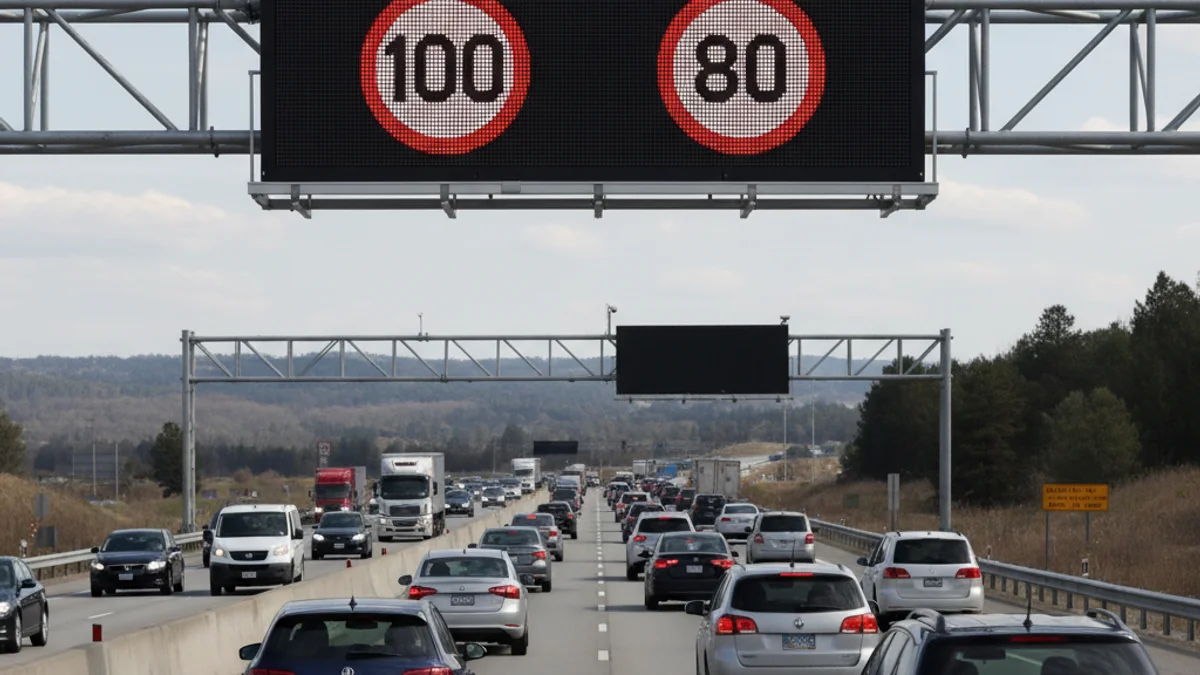
This new model moves away from the fixed 120 km/h limit, allowing the maximum speed to vary based on factors such as traffic intensity, visibility, weather, and the presence of incidents. The main goal is to prevent risky situations when the road is saturated and optimize flow during periods of high congestion.
The AP-7, which crosses the province of Tarragona from north to south, is one of the motorways with the highest vehicle density in the country. During peak hours, weekends, and holiday periods, this infrastructure often exceeds its capacity, significantly increasing the risk of accidents and prolonged delays.
The “smart road” approach relies on variable message signs and real-time traffic control systems. These mechanisms inform drivers of any changes in the speed limit, allowing for specific reductions to adapt to the road's particular situation.
The project has undergone several testing and data analysis phases in the area surrounding El Vendrell, where the system's performance has been evaluated under real driving conditions. These tests are crucial for determining whether the model can be applied more broadly across the AP-7 and other major road networks, a technology already used in countries like Germany or France.