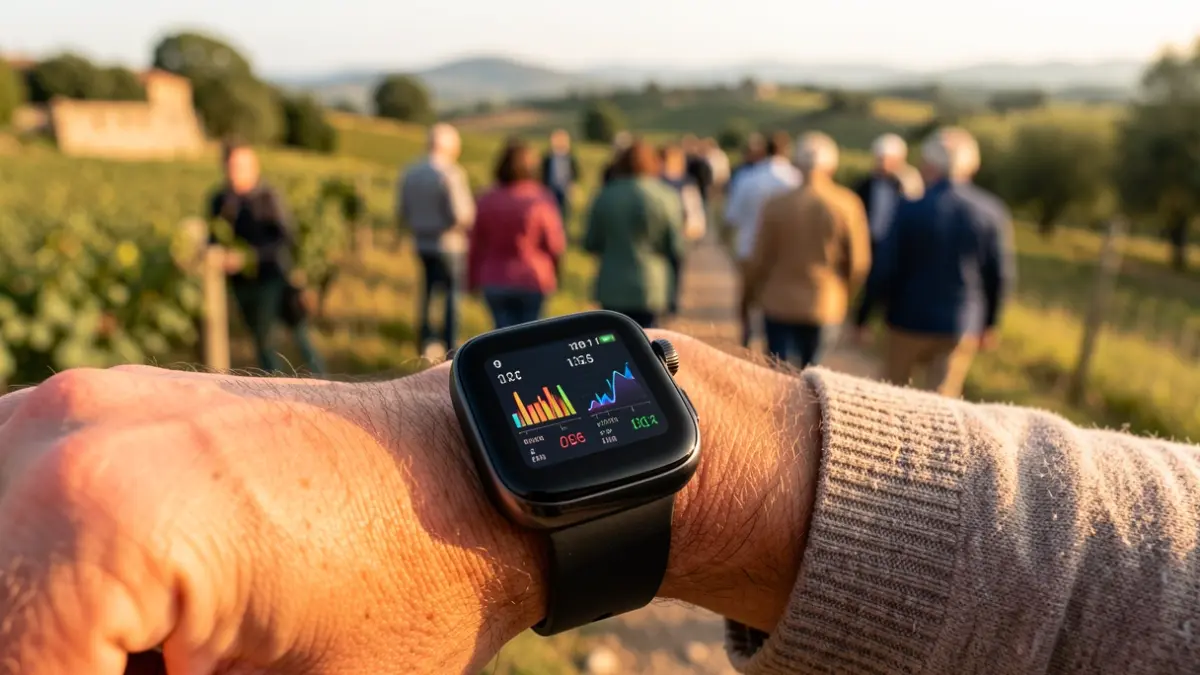
The Terra Alta Primary Care Team (EAP) has launched an innovative pilot test employing smart wristbands for the remote monitoring of patients with heart failure. This initiative, driven by the Center for Innovation and Reference Support (CSIR), will assess over four months the potential of this technology as a support tool from Primary Care.
The project involves approximately eighty patients from the twelve municipalities within the region: Arnes, Batea, Bot, Caseres, Corbera d’Ebre, la Fatarella, Gandesa, Horta de Sant Joan, el Pinell de Brai, la Pobla de Massaluca, Prat de Comte, and Vilalba dels Arcs. The primary objective is to determine if a continuous monitoring system can enhance clinical follow-up for individuals with complex chronic conditions, facilitating the rapid detection of potential decompensations, particularly in patients with functional class II and III heart failure.
Ester Gavaldà, manager of Primary Care and Community in Terres de l’Ebre, highlighted the significance of this pilot test in exploring new tools for a rural territory like Terra Alta. "We are committed to innovative and proactive models that help bring healthcare closer to people, improving accessibility and continuity of care," she stated.
This initiative is part of the CAIROS project, focused on digital transformation and the integration of healthcare services. A multidisciplinary team has been formed, including professionals from the EAP Terra Alta, the Information and Communication Systems Directorate (DSIC) of the ICS Terres de l’Ebre, and researchers from the Research Support Unit of Primary Care Terres de l’Ebre – IDIAP Jordi Gol. The TIC Salut Social Foundation also collaborates.
The pilot test addresses the need to adapt care models to the reality of Terra Alta, a region characterized by geographical dispersion, an aging population, and challenges in professional coverage. The smart wristbands will enable real-time collection of clinical data, making it available to healthcare professionals for analyzing patient health trends and responding more quickly to incidents.
Francesca Frígola Pérez, director of EAP Terra Alta, explained that the data gathered allows for more accurate monitoring and identification of trends that could signal potential atrial fibrillation or other decompensations. "This information helps us act earlier, contacting the patient if necessary to assess the situation and provide a more immediate and effective response, sometimes avoiding emergency room visits or hospital admissions," she added.
Prior to the project's launch, a preparatory phase was conducted to select the most suitable technology, analyzing the region's connectivity, identifying remote monitoring devices, and holding focus groups with healthcare professionals.
Over the coming months, the data collected will be used to generate alerts for potential signs of decompensation, supporting decision-making by medical, nursing, and biomedical engineering teams. The results will help evaluate the real impact of this monitoring model on chronic care in rural settings.