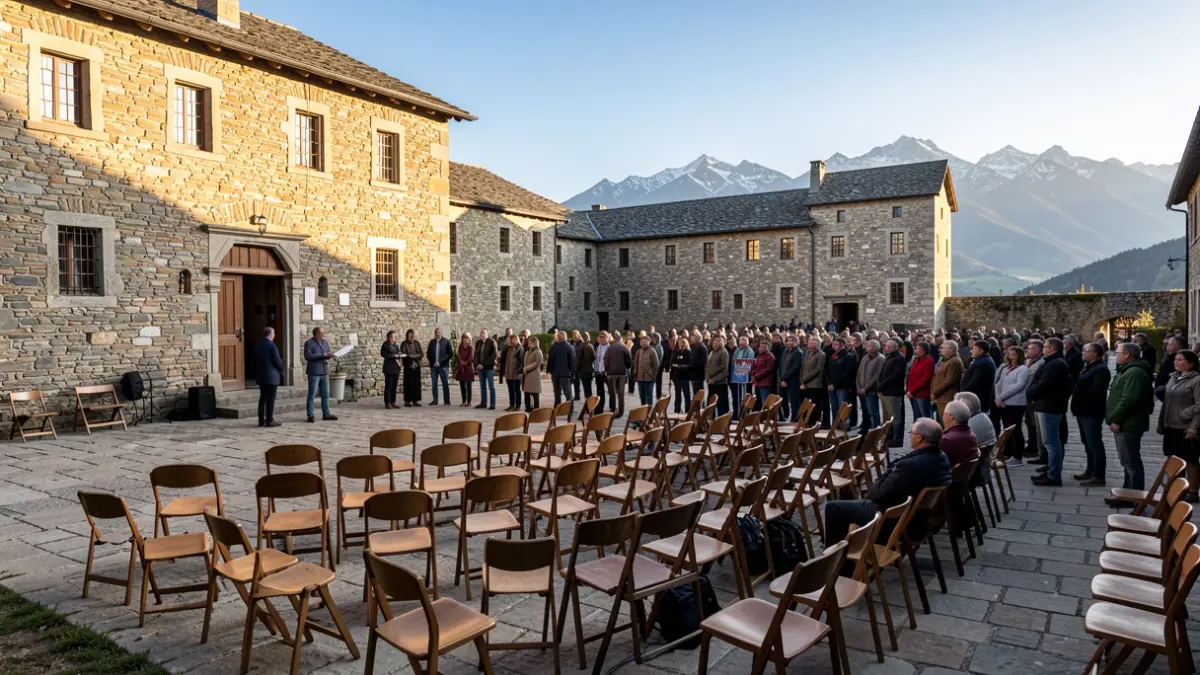
La Seu d’Urgell was one of the final venues for the 15th edition of the Pyrenean Early Music Festival (FeMAP). The concerts by Bach Collegium Barcelona, held on Sunday at the Seminary of La Seu d’Urgell and the Monastery of Sant Pere de Camprodon, marked the end of the event.
The festival, which took place throughout July and August, brought early music to various towns in the Pyrenees, including Andorra and Northern Catalonia. The edition kicked off on July 3rd at the Cathedral of La Seu d’Urgell, and since then, around fifty concerts have been performed in emblematic locations.
The organization reported a positive assessment, estimating an attendance of over 5,000 people, a figure similar to the previous year. A total of 11 performances sold out, and many others had very high occupancy rates, demonstrating the public's strong reception of the program.
Alfons Pérez, director of FeMAP, described the edition as "highly positive," highlighting audience satisfaction and the success of parallel activities. Artists also praised the venues, audience response, and the festival's organization.
The diversity of proposals was a key focus of this edition, covering different periods, styles, and repertoires of early music with varied ensemble formats.
Tourist Packages continued to attract visitors to the region beyond the concerts, generating over 100 direct overnight stays and reinforcing the festival's impact on the Pyrenees' tourism and economic development.
Socially, FeMAP offered 24 concerts in retirement homes, mental health centers, and other groups, underscoring its commitment to accessible culture.