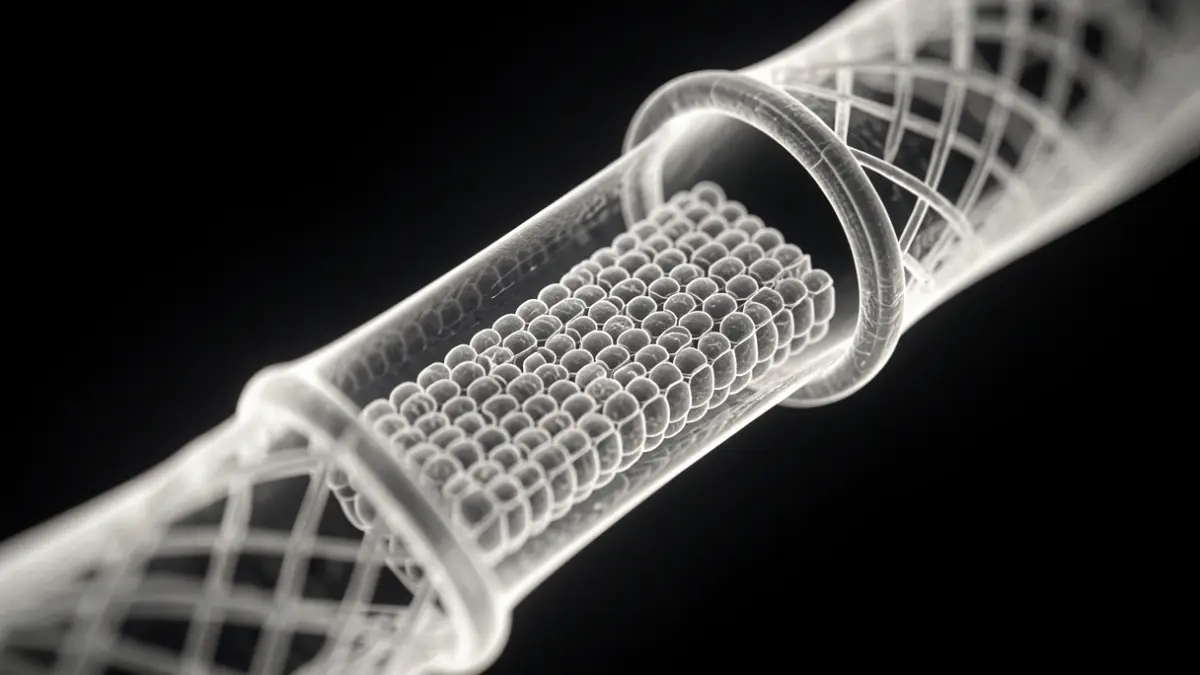
The research, conducted in Cerdanyola del Vallès, employs a sublimation-driven transport reaction to achieve these nanowires. Aberration-corrected scanning transmission electron microscopy has revealed the highly ordered structure of the BiTeI nanowires.
Separation of filled and empty nanotubes using density gradient ultracentrifugation and evidence of host–guest interactions via Raman spectroscopy are key steps. Encapsulating BiTeI has shown to increase the optical band gap and stably enhance electrical conductivity in macroscopic films.
First-principles calculations indicate that compressive strain significantly modifies the BiTeI electronic structure, including reduced Rashba splitting and strain-induced band reordering. Overall, nanoconfinement is demonstrated as a powerful route to engineer strain-tunable electronic states in polar semiconductors at the one-dimensional scale.