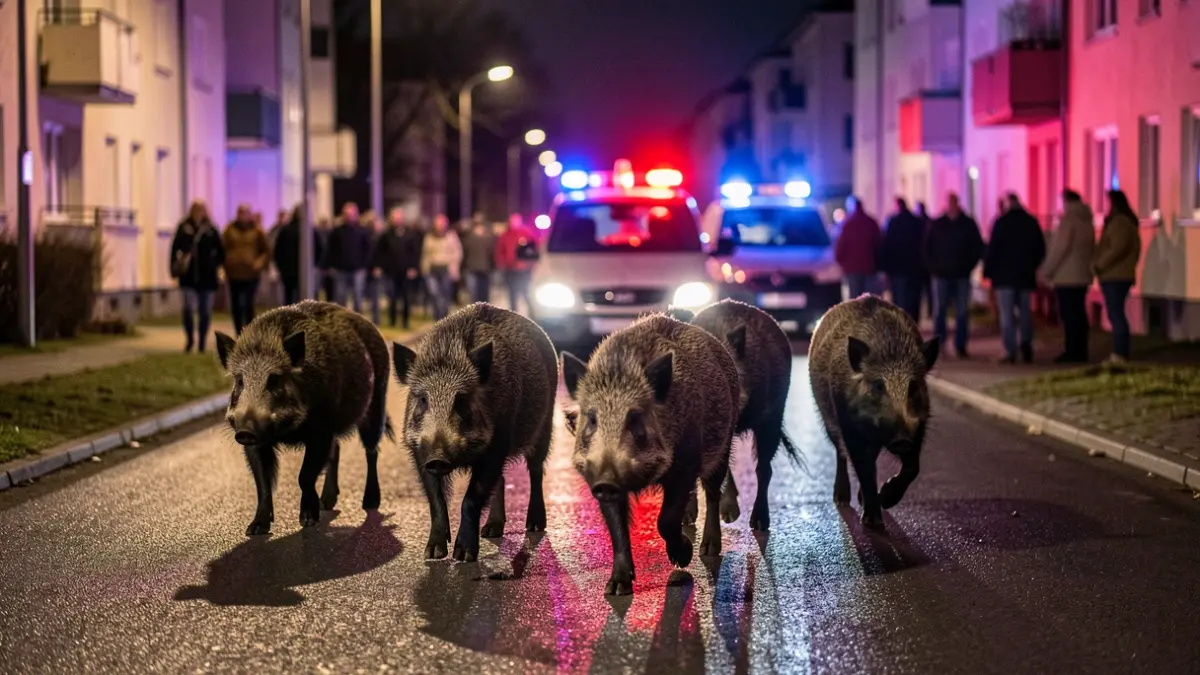
The Directorate General of Rural Agents has issued a statement to justify the operation carried out early Friday morning in the Roc Blanc neighborhood of Terrassa, where a wild boar family was culled after the Municipal Police received a report of wild animals on public roads.
The operation has sparked controversy among some local residents, who consider the measure disproportionate and question the safety of the inhabitants. This situation echoes a similar incident that occurred almost a year ago in the same neighborhood.
Rural Agents argue that the presence of wild boars in an urban center like Terrassa is exceptional and can pose risks to citizens. They point out that wild animals outside their natural habitat can react unpredictably under stress.
They emphasize that these interventions in urban areas are uncommon and are only carried out exceptionally, after an individualized technical assessment determines the necessity for the African Swine Fever eradication plan and guarantees the safety of people and their property.
The intervention began once the Terrassa Municipal Police secured and cordoned off the area, controlling access. Rural Agents highlight the complexity of these operations, which aim to balance public safety, animal welfare, and the effectiveness of sanitary control.
Regarding the necessity of the culling, they state that it is not a predetermined decision but responds to technical, operational, safety, and animal health criteria. The animals' behavior, the environment, associated risks, the feasibility of capture methods, and sanitary objectives were analyzed.
Finally, they recall that members of the Special Animal Capture Group (GECA), responsible for the operation, have specific training and the necessary technical means to intervene in both natural environments and, exceptionally, in urban settings.