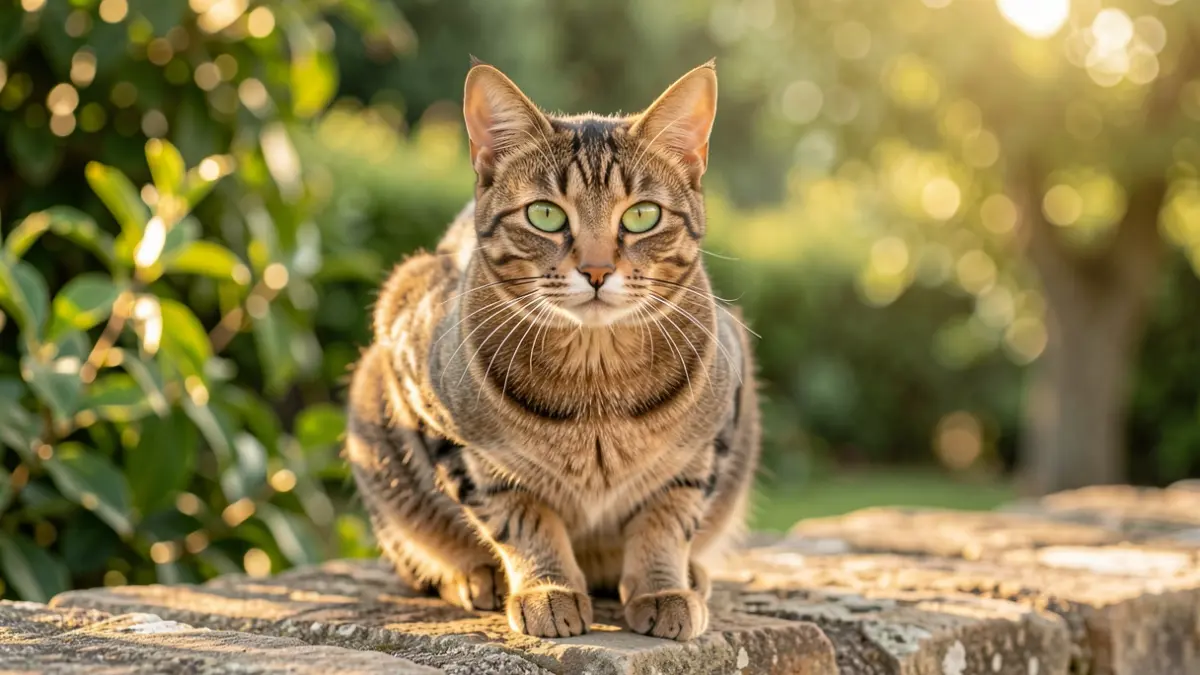
Domestic cats, despite their elegant and mysterious appearance, pose a significant threat to biodiversity. A recent study, described as pioneering and carried out in Sant Cugat del Vallès, highlights how the large proliferation of these felines is severely affecting local ecosystems. Although they have coexisted with humans for about 10,000 years, their innate predatory instinct remains strong, leading them to actively hunt all sorts of animals, from small mammals to birds and reptiles, even when well-fed.
The research, which includes data from municipalities in Vall d’Aro and Tarragona, indicates domestic cat densities far exceeding those of their wild relative, the Felis silvestris. In Vall d’Aro, for instance, a density of 27 cats per square kilometer is estimated, a figure 34 times higher than that of wildcats in Europe. This overabundance, often exacerbated by so-called feeding "colonies," creates "enormous" predatory pressure on native wildlife, especially in areas close to natural ecosystems.
The study from Sant Cugat del Vallès has quantified for the first time the direct impact on the Ibero-Provençal wall lizard (Podarcis liolepis). An inverse relationship has been observed between the abundance of cats and these reptiles, leading to their complete disappearance in areas with high feline density. Furthermore, amputations and tail alterations have been detected in surviving lizards, negatively affecting their survival. According to Enric Ortega, a biologist with the Societat Catalana d’Herpetologia and lead author of the study, this case serves as a "model to demonstrate the impact of cat predation, which is similar in other reptiles and birds..." This predation can unbalance entire populations, as in the case of geckos, which control pests like pine processionary caterpillars.
Globally, the figures are alarming: in the United States, domestic cats cause the deaths of between 1.3 and 4 billion birds and 6.3 to 22 billion mammals annually, being the leading cause of anthropogenic mortality and responsible for 14% of global extinctions of mammals, birds, and reptiles.
Current legislation, such as the Spanish law 7/2023 on animal welfare, complicates the management of these colonies by strictly protecting them, despite protests from scientific entities. This leads to paradoxical situations, such as the protection of endangered lizards in the Muntanyans de Torredembarra by domestic cats. Scientists propose alternatives such as reducing food supply to allow natural selection to act and reduce colonies, as "to reduce the predator, there is no better way than to diminish the food resource," states Josep Maria Bas, a researcher at the Universitat de Girona. "It's not a problem of the cats but a problem of the people," he concludes.