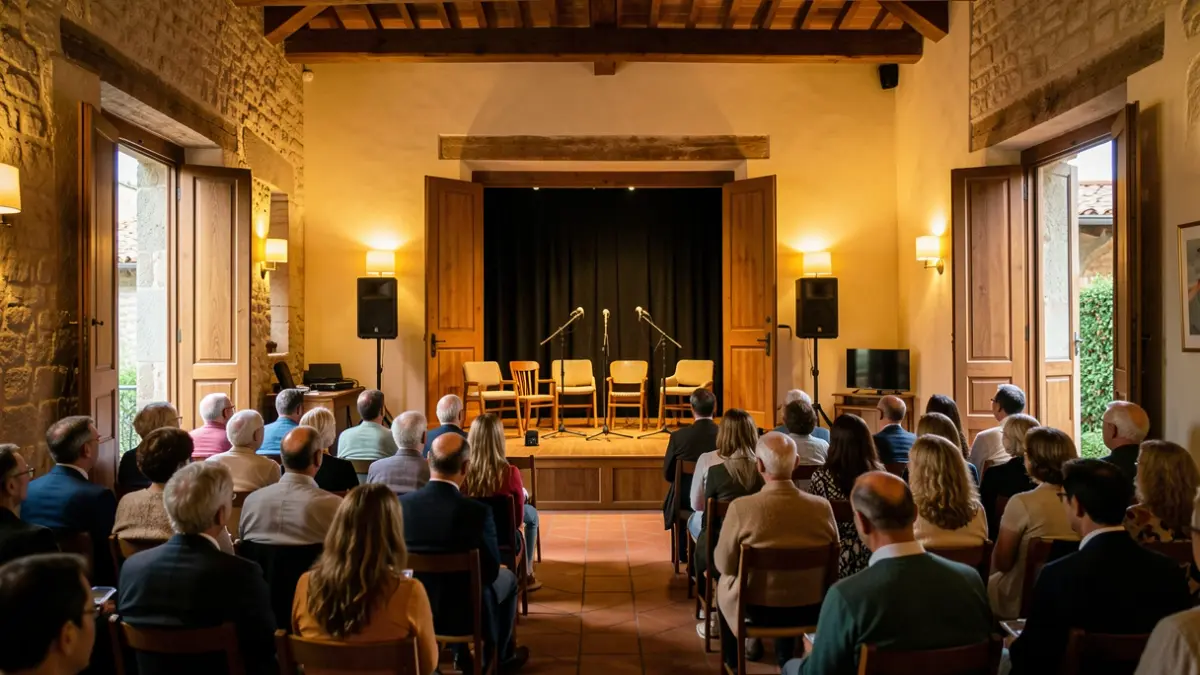
This methodology, which promotes pronunciation, fluency, and intonation, is supported by initiatives such as the Reading Aloud Contest, organized by the Fundació Enciclopèdia Catalana and the Departament d'Educació for over two decades. More than 1,000 centers across Catalonia participate annually.
The Institut La Romànica in Barberà del Vallès, located in Vallès Occidental, is one of the prominent participants, having secured victories in several territorial finals. At the center, reading aloud is not limited to the competition but has been integrated as a weekly activity within the Catalan language and literature curriculum.
“"When reading aloud, pronunciation and intonation are very important, and they allow us to see if a student understands what they are reading or not. If they intone well, they understand; if not, there is no comprehension."
Participation in the contest is viewed as an enriching experience. Each academic year, the institute holds auditions among secondary school students to select representatives, seeking fluent readers who are also willing to take on the personal challenge of the competition.
This practice has proven particularly beneficial for Spanish-speaking students, improving their relationship with Catalan and boosting their self-esteem when reading in public. The contest, which combines individual and collective readings, includes categories for different educational stages and for newly arrived students.
“"I have improved a lot in writing; now I am faster, and when the teacher speaks, I understand her better."
During rehearsals, the center emphasizes intonation and phonetics, especially the distinction between voiced and unvoiced 's' sounds, which often presents the most difficulty for students. This dedication not only enhances reading comprehension but also drives a qualitative leap in writing and overall proficiency in the Catalan language.