The earliest written records of the Llonch surname date back to the 14th century, with references to Bernat Llonch and later Pau Llonch in the 15th century, linked to a farmhouse that would give its name to a Sabadell neighborhood. Initially involved in lending money and animals, the family underwent a crucial transformation in the early 19th century.
The marriage between Antoni Llonch Gambús and Innocència Matas marked the beginning of the shift towards the textile industry. While the heir continued managing the farmhouse, three of his sons, Rafael, Feliu, and Francesc, began their training as apprentices in wool factories, preparing to establish their own businesses.
In 1833, Rafael Llonch Matas purchased machinery for spinning wool, bringing his brothers Feliu and Francesc into the partnership the following year. Despite their initial collaboration, each established their independent businesses from 1839 onwards, solidifying the family's presence in Sabadell's textile sector.
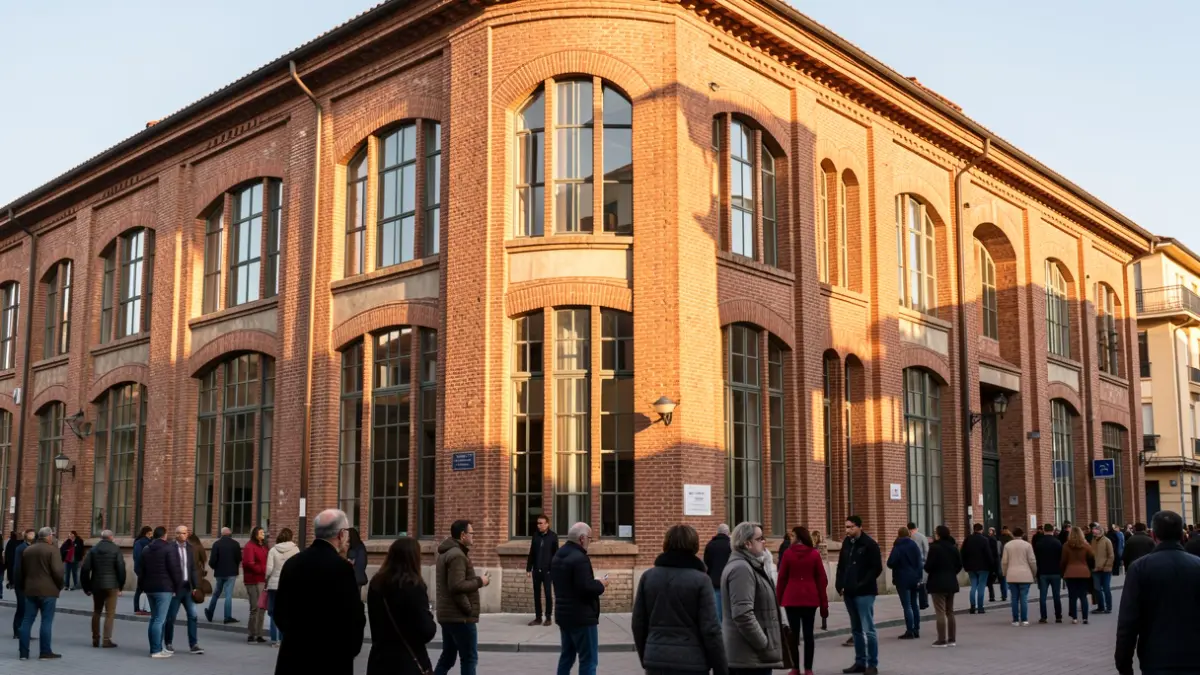
The second generation, led by Joan Llonch Sanmiquel, Feliu's son, founded the company Juan Llonch y Hermanos and built the Vapor Llonch in 1877. Joan played a significant role in the founding and early years of the Banco de Sabadell, serving as a shareholder and director for 35 years, and actively participating in the city's institutional life as a councilor and acting mayor.
Francesc Llonch Cañomeras, from the third generation, expanded the industrial activities and played a key role during the Banco de Sabadell crisis in 1926. He chaired the Gremi de Fabricants (Manufacturers' Guild) and was a co-founder of the Mútua Sabadellenca d’Accidents del Treball (Sabadell Mutual for Work Accidents). During the Civil War, his company was collectivized, and he went into exile.
Joan Llonch Salas, great-grandson of Feliu Llonch Matas, established the public limited company Llonch, SA in 1941. He was a prominent leader of the Lliga Regionalista and played an active role in propaganda during the Civil War. Despite difficulties, he held significant economic positions, serving as a member of the Governing Board of Banco Sabadell for thirty years and receiving the Premi Sant Lluc for his dedication to art and culture.
With the death of Antoni Llonch Gambús in 1974 and Joan Llonch Salas in 1976, the trajectory of this dynasty of politicians and industrialists, which left a significant mark on Sabadell's history, came to a close.