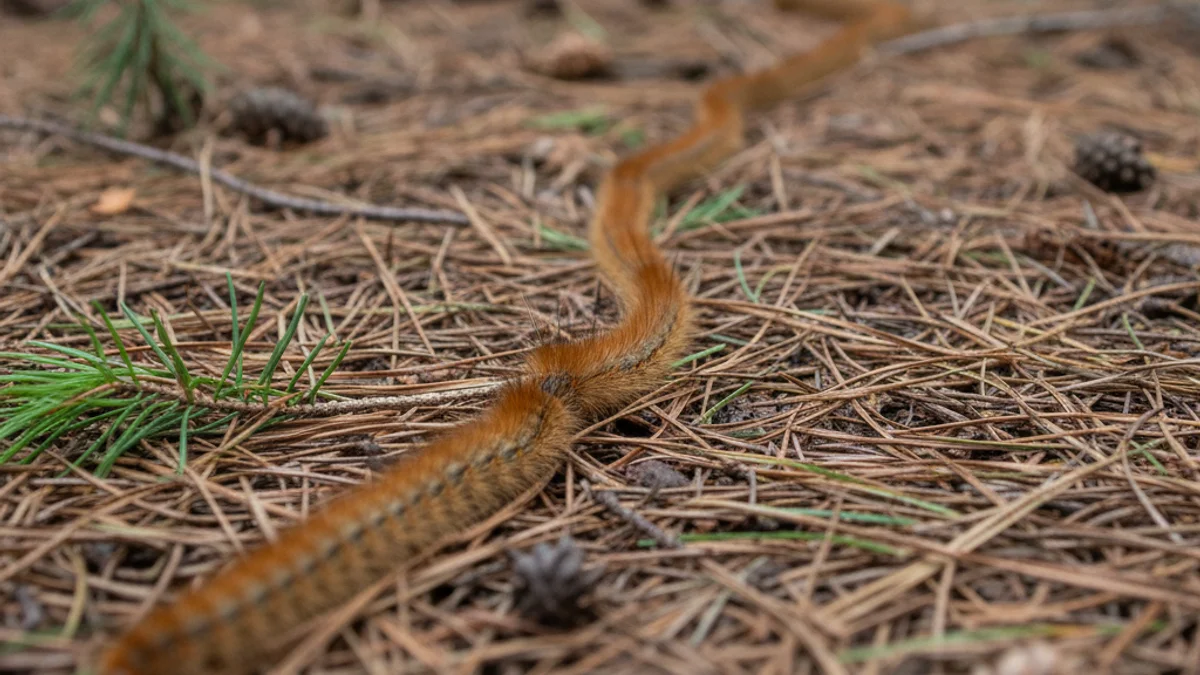
The pine processionary caterpillar, very common in the Iberian Peninsula, is harmful to both animals –mainly dogs– and humans –especially children. Veterinarian Paula Lechuga, from the Morera veterinary clinic, explains that the caterpillar releases tiny, poisonous hairs that cause an immediate inflammatory reaction.
“"It causes hives in children, if they are not allergic, but in dogs, it can cause fatal anaphylactic shock."
Historically, the caterpillars began descending from their nests between February and March. However, climate change has advanced their presence, now being seen as early as January. Mar Molina, Deputy Mayor for Urban Space, notes that increasingly mild winters have caused them to appear sooner, though this does not mean there are more of them.
The most evident sign when an animal contacts the processionary is excessive salivation and visible nervousness, accompanied by notable facial swelling. Within an hour, circulatory difficulties may appear, and the tongue can turn blue. Failure to seek veterinary care quickly can lead to respiratory distress, convulsions, and, in the worst cases, death.
Immediate action, according to Lechuga, is to remain calm and wash the area with warm or hot water, as this inactivates the toxin. It is crucial not to rub the area to prevent the hairs from embedding further. For prevention, it is recommended to keep dogs on a short leash in wooded areas.
The Sabadell City Council confirms that it is actively working on preventive treatments for trees to reduce the presence of the processionary. Furthermore, when residents report sightings, action is taken to mark the area, and information campaigns have been launched to explain the risks to the public.