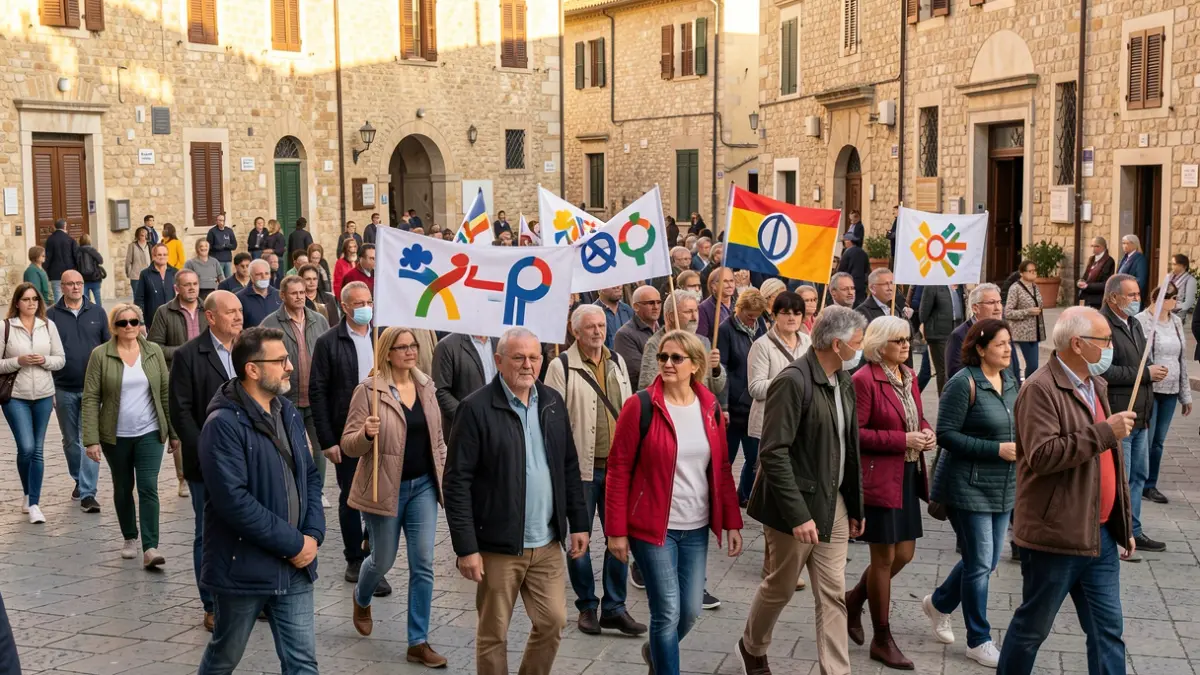
The coordinator of the Cancer Screening Office at Parc Taulí, Dr. Anna Selva, has indicated that participation in the early detection program for colorectal cancer in the Vallès Occidental region currently stands at 49.5%. This figure, while representing a notable increase from 37% recorded in 2015, is still far from the 65% target set by European guidelines.
Data collected at Parc Taulí, the center that centralizes screening activity in Vallès, reveals differentiated participation patterns. Men show less interest than women, and involvement decreases with age, being lower between 50 and 60 years old and increasing thereafter. Similarly, territorial and socioeconomic disparities are observed, with lower participation in areas with lower socioeconomic levels and, paradoxically, in high-income areas where part of the population opts for private tests. The most predisposed profile to participate is that of women over 60 with a medium socioeconomic level.
“"The test detects the presence of occult blood in the stool, a possible indicator of lesions in the colon or rectum. Around 20% of detected cancers are so early that they can be cured with colonoscopy alone."
This trend is not exclusive to Vallès Occidental. In Catalonia, overall participation is around 47%, with significant variations between regions, ranging from 61% in Alt Pirineu i l'Aran to 39% in Girona. The northern metropolitan region, which includes Vallès Occidental, stands at 48%. Experts highlight that the proximity between healthcare professionals and citizens in smaller municipalities often fosters greater awareness and participation.
The screening procedure involves sending a letter every two years to eligible individuals. In 2026, the program is intensifying in Sabadell and other localities such as Sant Cugat, Sant Quirze, and Rubí. Participants receive a kit at a pharmacy to collect a stool sample at home, which is then returned to the same establishment for analysis. In case of a positive result, a colonoscopy is performed to remove polyps, which can evolve into cancer, making screening an effective prevention tool.
Colorectal cancer is the most common cancer in the general population and the second most diagnosed in both men and women. Despite advances in prevention and treatment, it remains the second leading cause of cancer mortality, surpassed only by lung cancer, mainly due to its high incidence. Healthcare professionals emphasize the importance of increasing participation in these preventive programs.