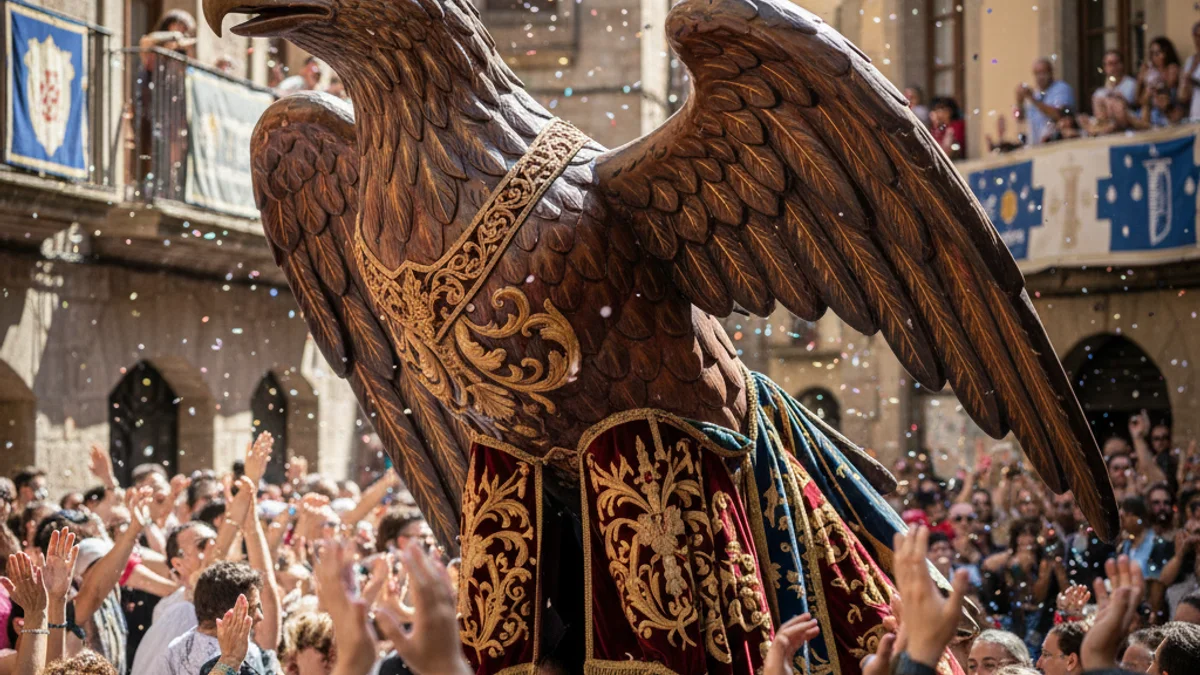
The new figure, which is municipal property, was unveiled coinciding with the feast of Mare de Déu de la Candela. It was constructed at the Santuari workshop, following a historical study by the Valls Ceremonial Procession Commission, aiming to recover the image of the baroque eagle that was destroyed during the Civil War.
It was built using a wooden skeleton covered with stuccoed linen cloth and oil polychrome, with the head, wings, and tail made of cedar wood, replicating period materials. The official premiere took place in the Plaça del Blat, from where the Eagle traveled to the church of Sant Joan, where it was blessed and later performed its solemn dance.
“"The traditional aesthetic of the city's eagle is recovered, which we have extensively documented throughout the centuries and also in photographs."
This recovery coincides with the 325th anniversary of the first documented reference to the Eagle in Valls, dating back to 1700. The previous figure, created by Anton Gurí and premiered in 1991, broke with the traditional aesthetic by being silver-plated, and according to the commission, did not fit into the procession's “baroque ritual.”
The new festive element, dark brown and baroque in style, resembles other historical Catalan figures such as the Eagle of La Bisbal d'Empordà. Although the change generated some local debate, Oliva points out that this concern shows that “the festival is alive.” The previous figures, including the silver-plated one from 1991, will become part of the heritage collection of the Valls Museum.