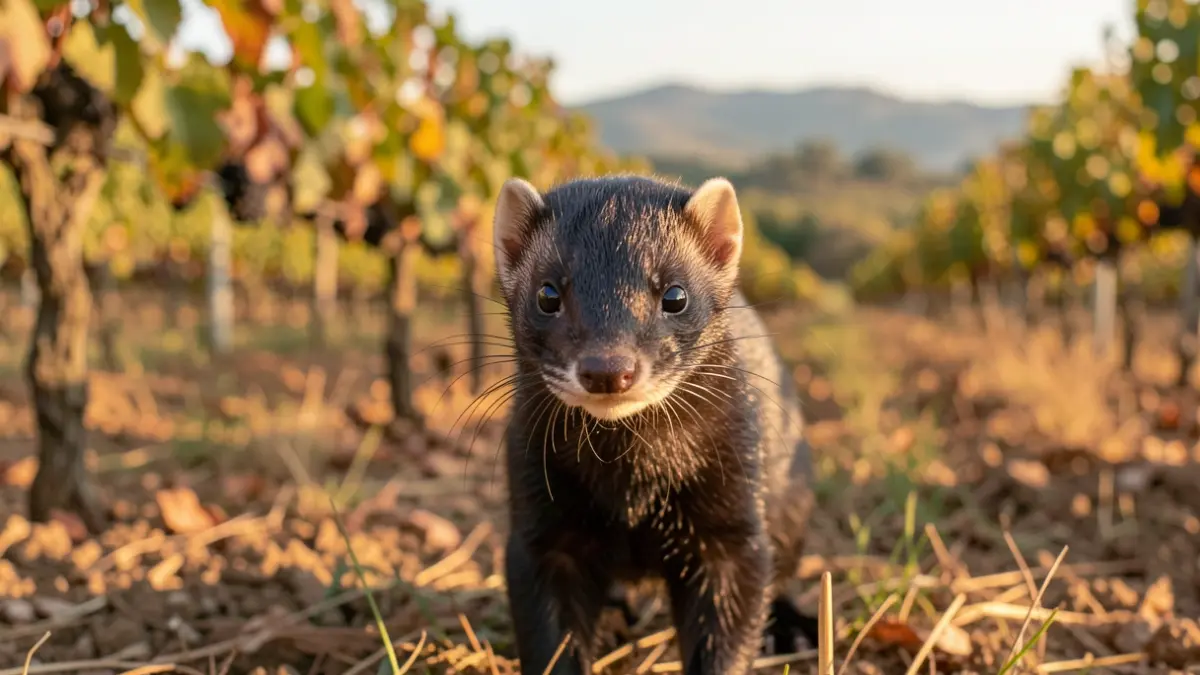
The Secretary of Ecological Transition, Jordi Sargatal, participated this Friday in the reintroduction of 9 European polecats in the vineyards of Celler La Vinyeta, in Alt Empordà. This action is part of the TuroCat project, which this year plans to release a total of 25 captive-bred individuals in various locations across Catalonia to prevent the species' extinction.
Sargatal highlighted that this is the highest number of releases since the project began and that efforts will continue over time to ensure a healthy population. In Alt Empordà, three more individuals will be added soon. Animals will also be reintroduced in the Merlès valley (Berguedà) to reinforce the existing population and in Mas de Melons (Les Garrigues).
The TuroCat project, coordinated by the Generalitat de Catalunya and the Barcelona Zoo, integrates breeding for conservation, genetic management, reintroduction, scientific monitoring, and habitat conservation. The released individuals come from breeding centers such as the Centre de Fauna Salvatge del Pont de Suert, the Centre de Conservació de Fauna Salvatge de Camadoca, and the Centre de Raimat Natura, selected based on demographic and genetic criteria.
This collaborative model, which integrates public administrations, conservation centers, specialized entities, the scientific community, and the private sector, has become a prominent initiative for the conservation of endangered mammals in Catalonia. Sargatal emphasized that this network-based work is key to the success of conservation programs and highlighted collaboration with the primary sector, as in the case of La Vinyeta, where the presence of polecats can help control rat and rabbit populations.
Since the project's inception, 45 individuals have been released between 2022 and 2025, and with the 25 planned for this year, a total of around seventy European polecats will have been released in five years. Concurrently, scientific monitoring is conducted to assess survival rates, reproduction, and the conservation status of wild European polecat populations in Catalonia.
The European polecat is one of Catalonia's most endangered mammals, listed as critically endangered due to habitat loss and degradation, reduction in prey, road accidents, and the use of rodenticides. Sargatal pointed out that the use of anticoagulant rodenticides harms the polecat's natural predators, such as weasels and owls, and advocated for promoting alternatives to control rats without impacting biodiversity.