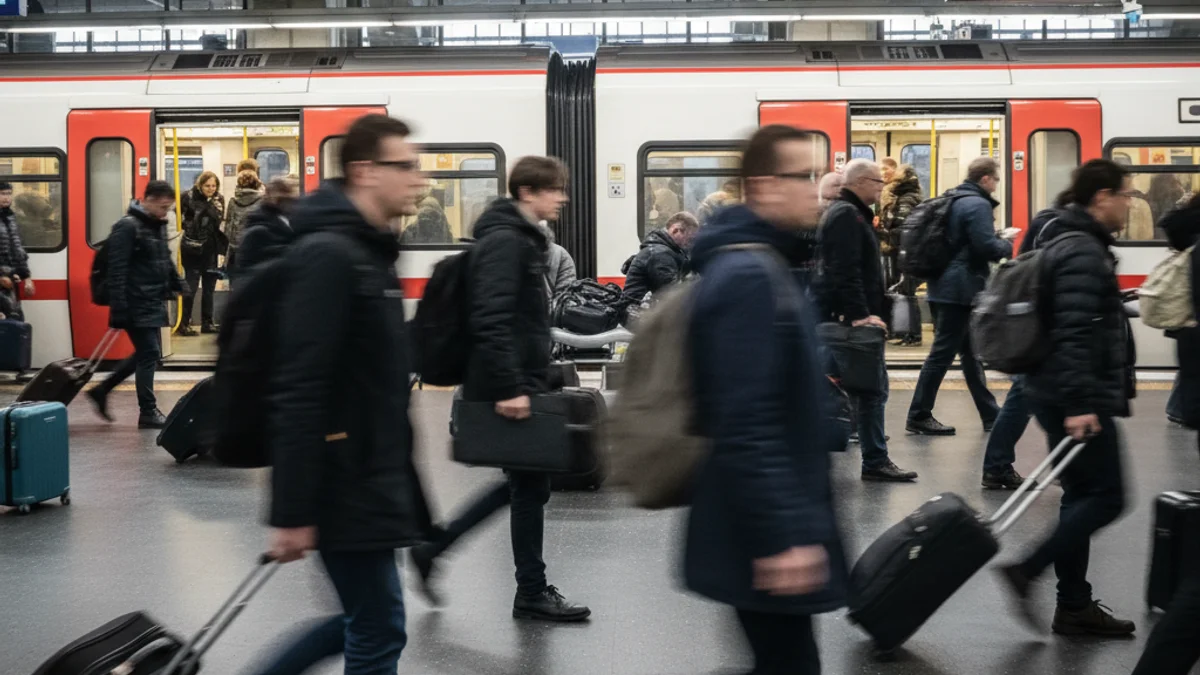
A few days after the largest high-speed tragedy in Spain, a palpable uneasiness is felt at Atocha station. Although passenger flow is lower due to the route paralysis with southern Spain, the station remains a hive of activity, where the recent string of rail accidents divides user opinions.
“"When I was going to catch the train to Madrid, the Córdoba incident just happened, and I wondered whether to take it, because I am a bit sensitive about these issues."
The fear generated by tragic events like those in Adamuz or Gelida has a profound emotional impact, reminding users of their vulnerability. However, data from the State Railway Safety Agency shows that accidents have significantly decreased, with only 0.27 significant rail accidents per million kilometers traveled.
“"It is more unsafe to go by car."
This feeling of insecurity is compounded by dissatisfaction with the maintenance of the Spanish railway system, which has caused delays on key lines such as Madrid-Barcelona. Emergency health psychologist Jesús Linares warns about indirect traumatic overexposure through social media, recommending reliance on official sources and avoiding over-information to restore confidence.
“"It is not about not getting informed, but rather about how, how much, and from which sources."