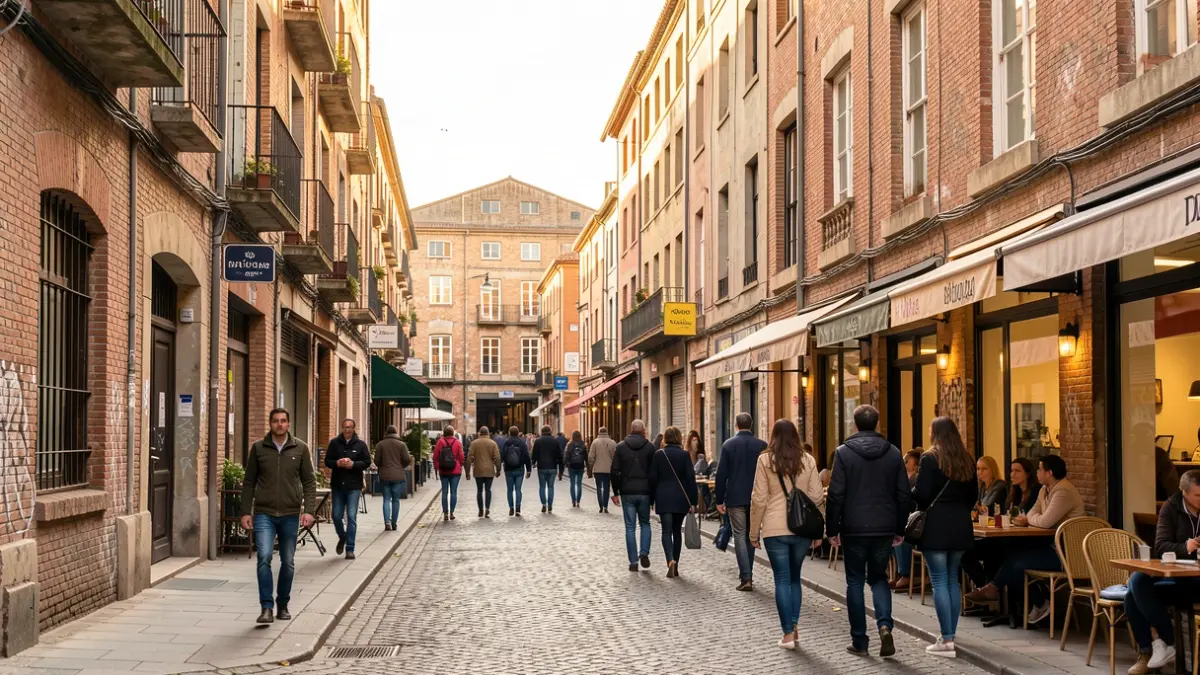
The study, titled Llengua, torna a casa (Language, Come Home), analyzes sixty-seven establishments on the rambla del Poblenou and concludes that Catalan is losing presence in both commercial interactions and daily uses. Spanish is consolidating as the majority language of communication, while English is gaining ground associated with new consumption patterns.
The data reveals that less than half of the shops respond in Catalan when addressed in that language. Catalan responses have dropped from 69% in 2012 to 48% in 2026, while Spanish has grown from 29% to 52%. In initial interactions, Catalan as a greeting has fallen from 34% to 21%, and Spanish has risen from 61% to 79%.
English is gaining ground in the commercial projection of establishments. On informational signs (hours, promotions, menus), it has gone from 0% in 2012 to 26% in 2026. On identification signs (business name), languages other than Catalan and Spanish, primarily English, have increased from 6% in 2012 to 22% in 2026.
Plataforma per la Llengua links this decline to the urban transformation of Poblenou, particularly following the 22@ initiative. The neighborhood has become a consumer product for temporary residents, international professionals, and investors, leading to a 165% increase in Australian and New Zealander residents and a 144% increase in Americans over the last decade.
This demographic shift coincides with intense real estate pressure, with rental prices increasing by 70.5% and purchase prices by 84% between 2014 and 2025. This displaces traditional residents, weakens spaces for natural Catalan use, and directs establishments towards an audience that does not require Catalan.
The organization presents Poblenou as a paradigmatic case but points to similar processes in other neighborhoods such as Vila de Gràcia, Barri Vell de Girona, Russafa in Valencia, Marina Alta, or Santa Catalina in Palma. They call for administrations to incorporate linguistic impact studies into major urban development projects.
The report requests measures such as reinforcing compliance with Catalan signage regulations, incorporating linguistic clauses in licenses and public aid, requiring linguistic integration plans for companies and co-working spaces, and protecting linguistically responsible local businesses. Experiences from the Basque Country, Wales, Ireland, Denmark, and the Netherlands are cited.
The most sensitive point is the growing gap between the visible presence of Catalan and its effective use. When a language ceases to be necessary for buying, working, or living in a neighborhood, it ceases to be fully normalized. Gentrification, the study concludes, also erodes linguistic vitality.