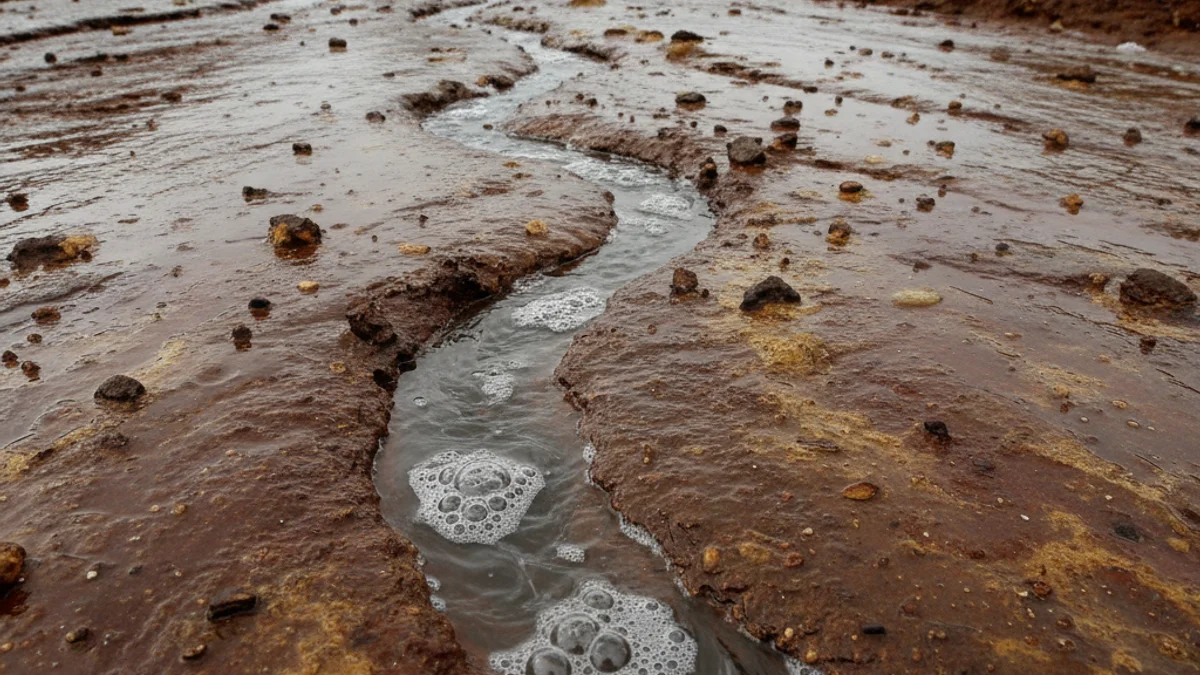
The town of Grazalema, in the Cádiz mountains, recorded exceptional rainfall between January and the first days of February, exceeding the 2,000 l/m² that normally falls in an entire year. This volume of water has completely saturated the subsoil, causing water to spring uncontrollably through sockets and walls, triggering a little-known phenomenon: hydrosisms.
“"The overpressure from so much water caused by the rains can be channeled through the fault in the area and cause it to move, provoking these small earthquakes of just over 2 in magnitude."
A hydrosism is a small earthquake induced by the high pressure of accumulated water in the ground. According to the National Geographic Institute (IGN), several tremors have been detected that did not reach magnitude 2.5 on the Richter scale. Hydrogeology expert Roberto Espínola explains that the massive entry of water disrupts natural balances, and the overpressure is released by moving small faults.
The fragility of the terrain in the Cádiz mountains, formed by porous calcareous materials, facilitates this phenomenon. Espínola compares the subsoil to “a kind of sponge that cannot absorb any more water”. This saturation can destabilize the ground and cause damage to infrastructure, landslides, or problems in the foundations of homes and bridges.
This phenomenon cannot be ruled out in Catalonia, as there are similar calcareous massifs, such as the Garraf or the Pyrenees. Although Catalan seismic activity is less pronounced than in Andalusia, Espínola warns that episodes of abnormal rainfall, linked to the climate crisis, could induce earth movements. Storm Marta is expected to bring more rain to the area over the weekend.