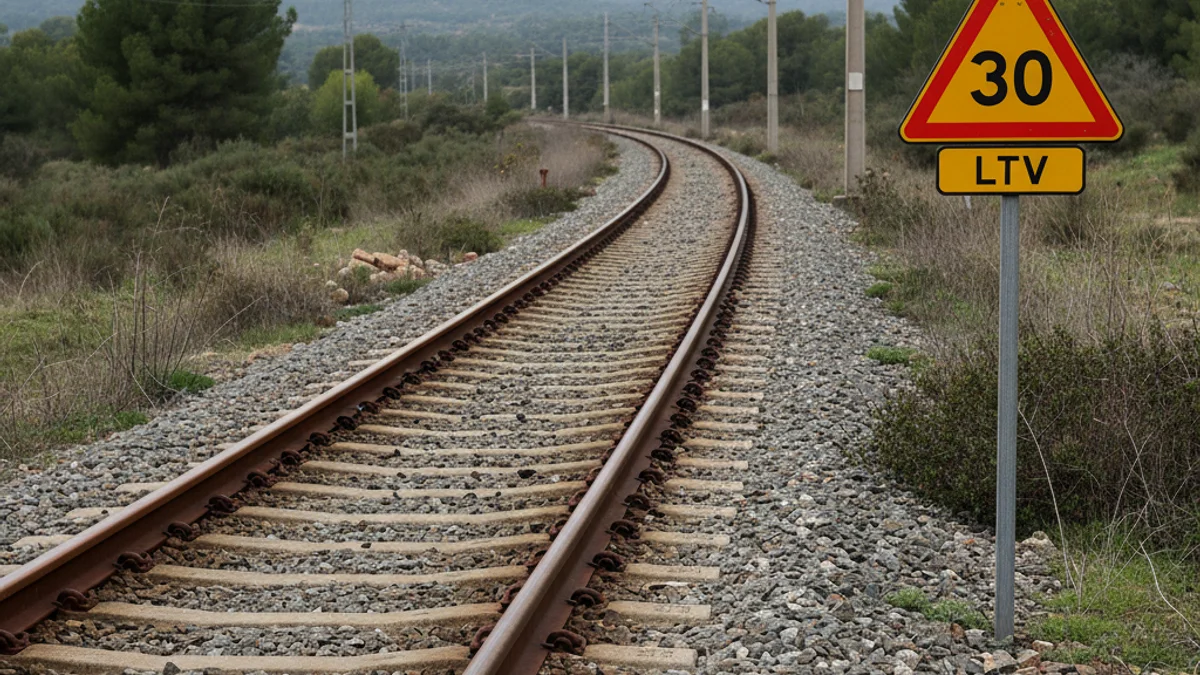
A comparison of Adif documents reveals that restrictions imposed due to infrastructure deficiencies have increased from 90 sections (affecting 78.8 km) on October 1, 2018, to 179 sections (totaling 130 km) currently. This increase nearly doubles both the number of affected points and the length of restricted tracks.
These limitations, which force train drivers to drastically reduce speed, generate a significant operational impact, as they increase journey times, accumulate delays, and require more human resources to cover scheduled services.
The increase is particularly notable in the regions of Barcelona (from 42 to 86 sections), Tarragona (from 19 to 57), and Girona (from 14 to 28). The only exception is Lleida, which has reduced restrictions from 15 to 8 affected sections. The largest surge has occurred in the last three years.
Of the sections that already had limitations in 2018, fourteen remain unrepaired. The case of Raimat (in Segrià) stands out, where a restriction due to a poorly maintained embankment was imposed on February 20, 2005. The maximum speed allowed at this point has dropped from 80 km/h to 30 km/h.
Commuter and regional lines such as the R15 (between Riba-roja d'Ebre and Reus) have increased from eight to seventeen affected sections, and the R4 (between els Monjos and Castellbisbal) from eight to eighteen. On the R11 line, which connects Girona to the border, restrictions have shifted, currently maintaining sixteen affected sections.