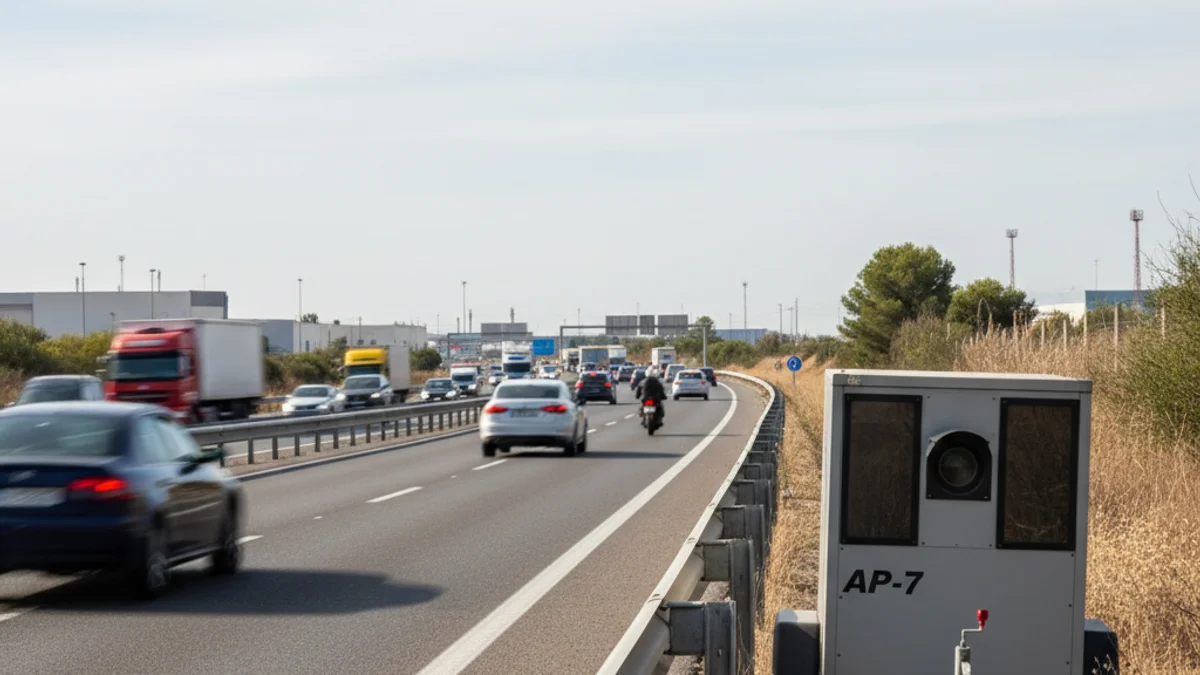
The new mobility strategy is applied along the 344 kilometers of the motorway, from the northern end in La Jonquera to Ulldecona in the south. These six new mobile devices join the four already operational, bringing the total number of itinerant radars to ten to monitor speed across the entire route.
The Minister of the Interior, Núria Parlon, explained the measure during an appearance in the Parliament, detailing that the cameras will ensure compliance with speed limits. The decision follows verification of the effectiveness of the first four devices deployed a year ago.
Thanks to the first four mobile devices, warnings for speeding were reduced from 5% to 2% of controlled vehicles in just two weeks.
The director of the Catalan Traffic Service, Ramon Lamiel, noted that the first four units controlled 11 million vehicles during 2025 and processed 585,000 sanctions. Trànsit confirmed that it does not intend to hide the radars and will warn of their presence, installing them at the most sensitive points with the highest accident rates.
In addition to speed control, the Interior Department will reinforce “exhaustive surveillance” of heavy vehicles, especially trucks, whose traffic has increased on the AP-7 since the end of tolls. Macro-controls will be expanded to review driving times and rest periods, aiming to prevent serious accidents and major traffic jams.