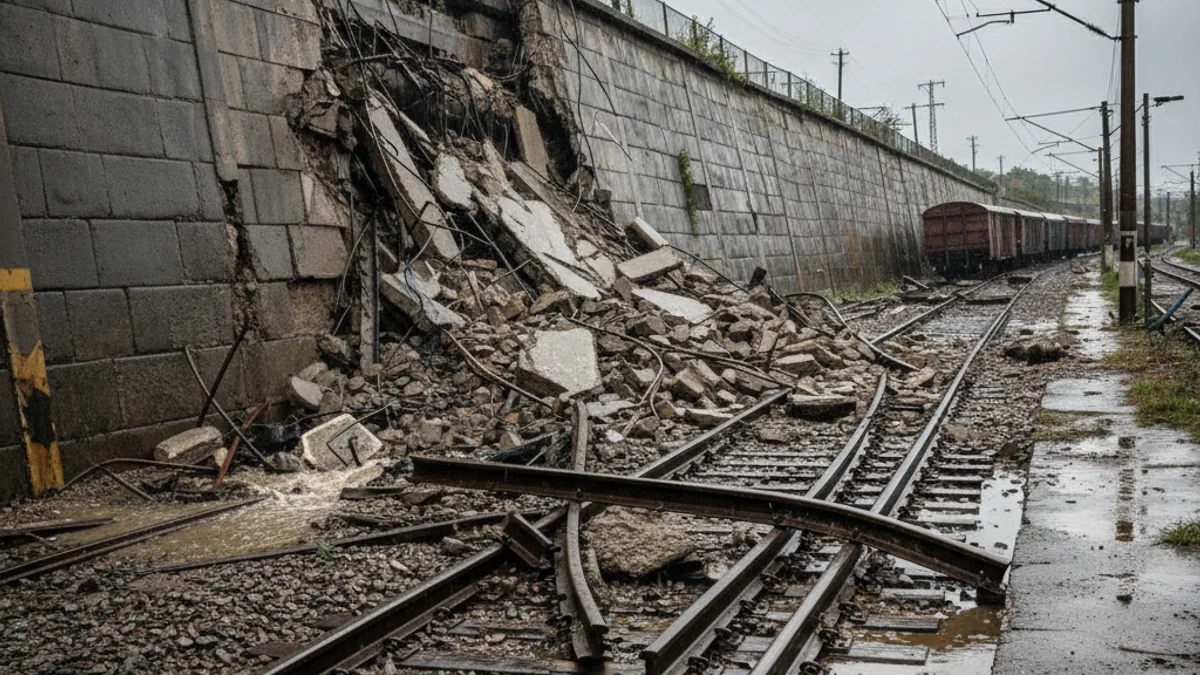
The initial investigation by the Railway Accident Investigation Commission (CIAF) into the Rodalies incident between Gelida and Sant Sadurní d'Anoia confirms that the train collided with an AP-7 retaining wall that was collapsing. The report notes that, despite being a straight section, the driver did not see the structure in time because it was night and raining heavily, with the wall leaning about 45 degrees onto the track.
According to data extracted from the train's recorder (the black box), the driver had a margin of only five seconds to apply the emergency brake before the collision. In that brief period, the train, traveling at approximately 60 kilometers per hour, covered about 50 meters. The CIAF is working on the hypothesis that the train reached the point of the accident just as the wall was giving way due to the force of accumulated rainwater.
“"The retaining wall that fell onto the R4 line in Gelida had been inspected three times since 2023, and that the last analysis, carried out in February 2025, did not detect any significant incident or risk."
Due to the impact, a trainee driver who was in the cabin died. The incident also left five people seriously injured, including the main driver and two other trainee drivers, in addition to 36 people with injuries of various degrees. Meanwhile, Renfe personnel continue the tasks of removing the carriages and preparing for the dismantling of the locomotive in Gelida.