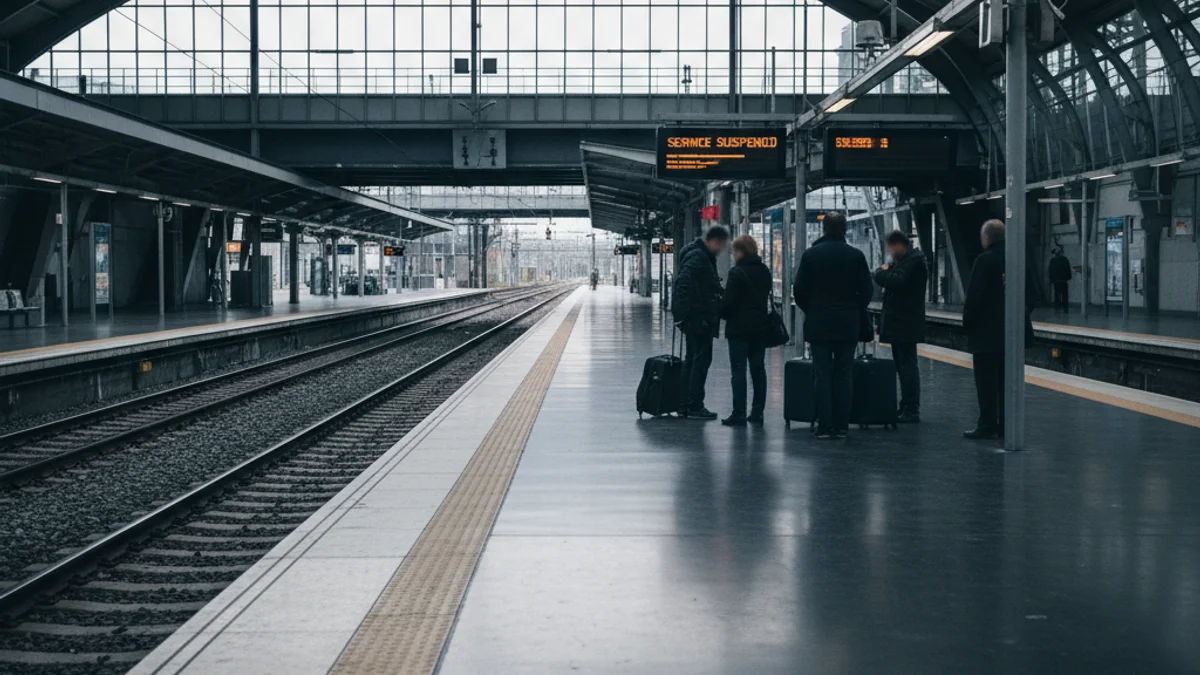
Railway sector workers are called to strike this Monday, Tuesday, and Wednesday to demand a “real and structural change” in the adoption of safety measures and system maintenance. The mobilization, which affects over a thousand drivers in Catalonia, follows the fatal accidents in Adamuz (Córdoba) and Gelida, and two weeks of chaos on the Rodalies (Commuter Rail) network.
“"Big words and good intentions are not enough to meet the demands."
The strike will be transversal across the entire state sector, affecting the public operator Renfe and the infrastructure manager Adif, as well as private companies Iryo and Ouigo, and various freight transport companies. Unions denounce the deterioration of service reliability, the lack of human and material resources, and the outsourcing of essential activities.
“"As long as concrete responses that allow the situation to be reversed are not produced, the strike call remains."
Negotiations with the Ministry of Transport, which included the presence of Minister Óscar Puente, remain open, although organizations like the CGT have criticized not being invited. Issues on the table include increasing the workforce at Renfe and Adif, greater infrastructure investment, and modifications to safety protocols.
The Department of Business and Labor has established minimum services of 66% during peak hours for Rodalies and regional services. The Secretary of State for Transport, José Antonio Santano, assured that the network will be “practically” operational in two weeks and that all temporary speed restrictions, some of which have been in force for years, will be eliminated by April.