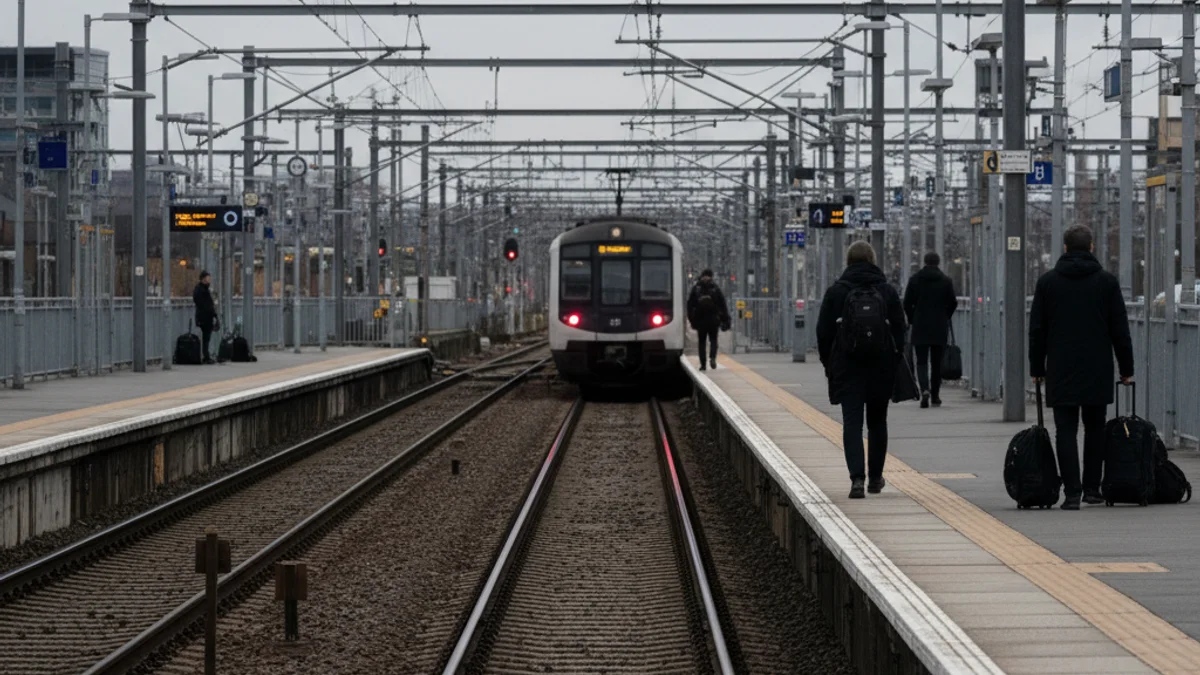
The train drivers' strike, called in protest against the fatal rail accidents in Adamuz and Gelida, began on Monday, February 9, and will last until Wednesday 11. This first day was marked by the breach of minimum services, resulting in the cancellation of 350 high-speed services (operated by Renfe, Iryo, and Ouigo) and 683 medium-distance services.
The Department of Business and Labor had set minimum services at 66% during peak hours and 33% during the rest of the day. However, since early Monday, rail lines across Catalonia have suffered significant delays due to the high adherence to the stoppage.
“"The group of drivers is clear that this is a day for the railway and that they want to do their job with guarantees."
Unions demand a structural change in the safety of the Spanish railway system, calling for greater investment in maintenance and an end to the outsourcing of work to private companies. Measures promised by the Ministry of Transport, such as increased hiring and new regulations, have not been enough to resolve the situation.