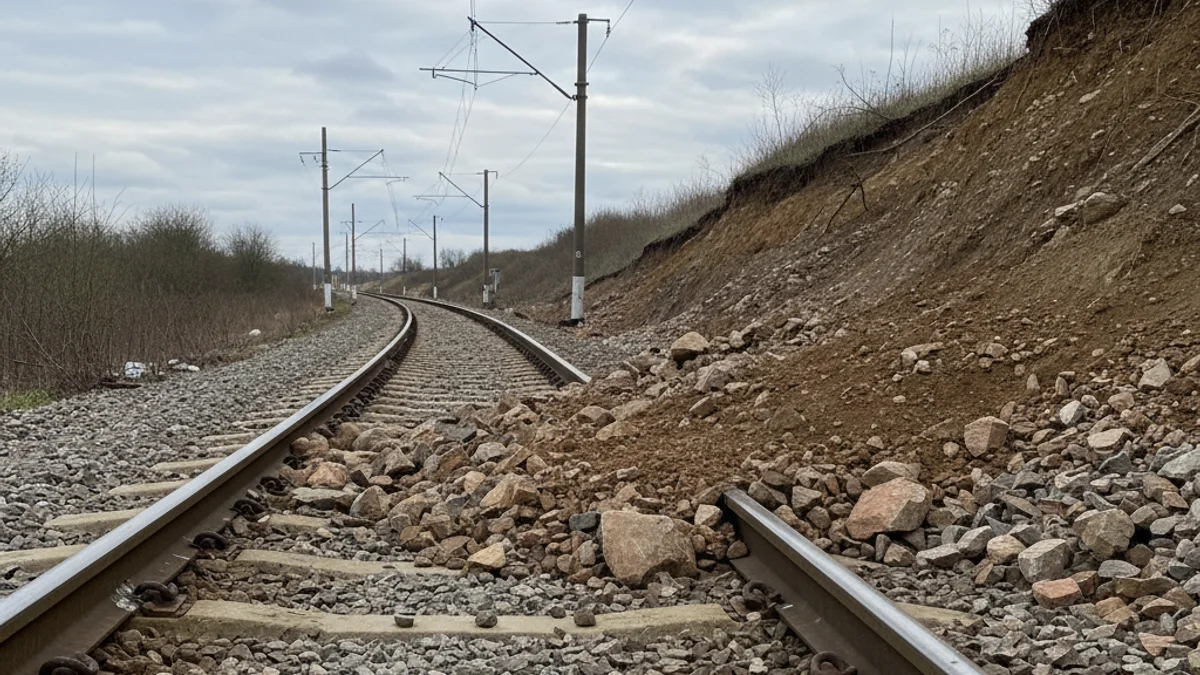
Data from the Institut Cartogràfic i Geològic de Catalunya (ICGC) shows that the number of incidents has multiplied by four compared to previous drought years. This phenomenon occurs because, after a long dry period where slopes remained stable, the water saturation from continuous rains has altered the ground's load state, causing it to lose its equilibrium.
“"That is why inspections and maintenance work on earthworks are so important."
Geologists, through the Observatori del GeoRisc, are calling for preventive rather than reactive action. They request coordination among administrations, a unified inventory of critical points, and the implementation of a proactive maintenance culture to avoid risks in road and rail systems.
The most dangerous areas are abrupt terrains that have registered periods of intense and continuous rainfall, such as Maresme, Empordà, the Serralada Litoral, and the Pyrenees. The most significant study to date, from 2018, detected 2,028 landslides on the Generalitat network, causing four fatalities that year.
“"In recent months, we have had a period of higher activity, and we are now in an especially intense phase."
Experts insist that infrastructure inspections must be 'at least annual' and carried out on foot, as checking from the train cabin, as initially done by Adif, is insufficient to assess the infrastructure's real condition. The ICGC, for instance, inspects all Ferrocarrils de la Generalitat lines annually on foot.