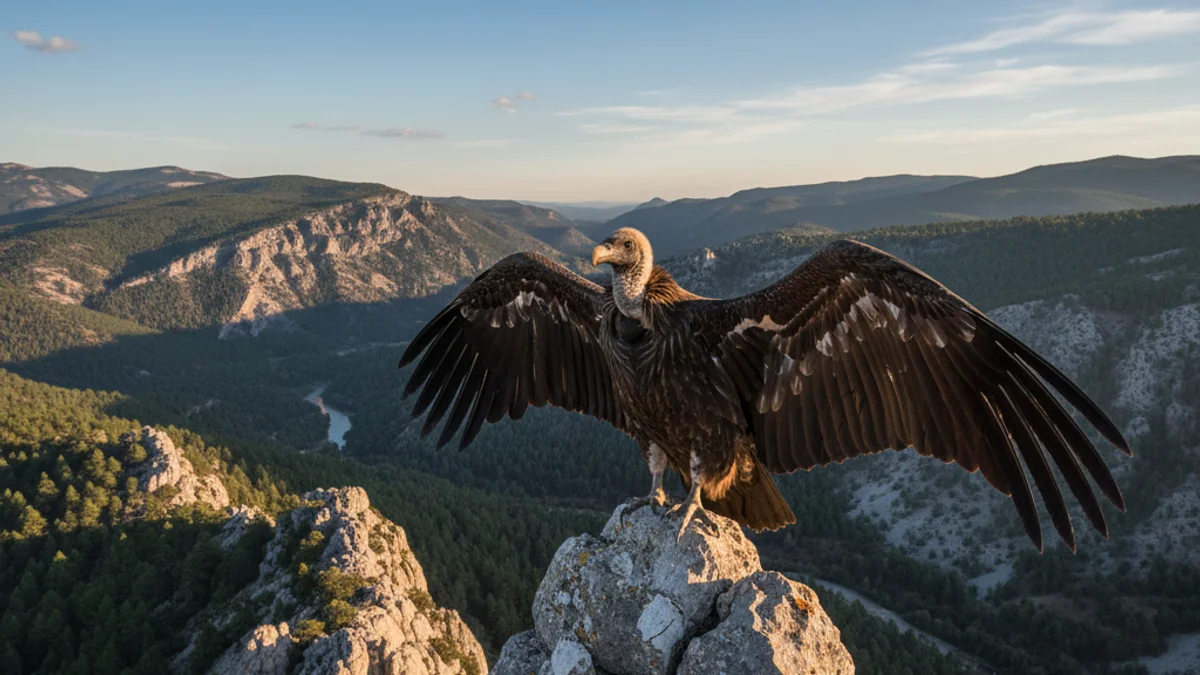
According to data from the Trenca Foundation, the year 2025 ended with a total of 66 resident specimens. Out of 19 breeding pairs, 13 chicks were born, and 12 successfully fledged. This represents a 71% flight rate, significantly higher than the average recorded over the last fifteen years in the Pyrenees.
The conservation strategy, supported by Endesa, relies on a network of Supplementary Feeding Points (PAS). These sites, located in areas such as Montferrer i Castellbò, provided over 15,000 kilograms of carrion. This initiative also contributed to a reduction of 4,301 kg of CO2 emissions by decreasing the need for animal carcass incineration.
The colony now mainly consists of locally-born individuals (44 specimens). The project aims to create a biological corridor connecting Iberian and Central European populations to ensure the genetic diversity of the Aegypius monachus, a species that was absent from these mountains for nearly two centuries.