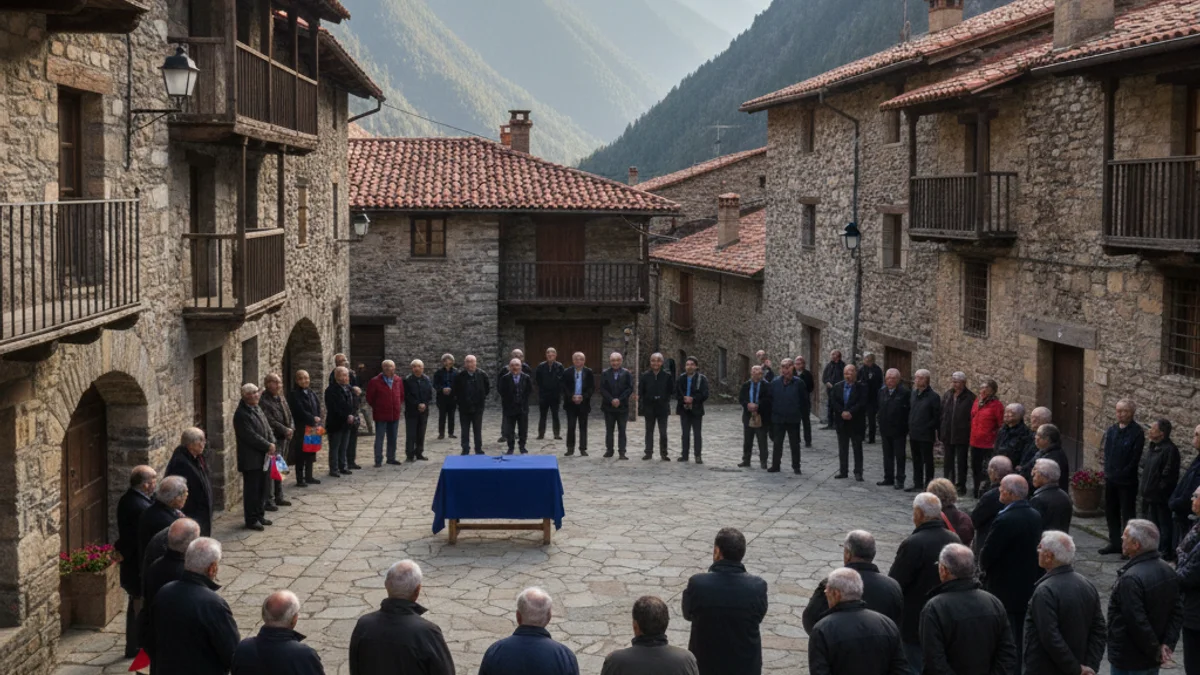
The explanation of the commemoration of these ten centuries of existence will be given by the historian from Urgell, Carles Gascón, the graphic designer Eudald Navarro, and the musician and composer Miquel Bonillo. The event will take place at 12 noon and will include refreshments for attendees. In case of rain, the ceremony will be moved to the village church.
Centuries of resilience and a diverse and changing community, which have forged a unique identity and a deeply rooted way of life, with life between the mountain and the river, embracing Catalan and Pyrenean culture.
The first written mention of Peramola, situated at the foot of Cogul, dates back to the year 1026. In the 11th century, the town belonged to the knight Arnau Mir de Tost. Later, the town's castle became the center of the Barony of Peramola, a seigniorial jurisdiction that largely coincided with the current municipal area, including settlements such as Tragó, Nuncarga, Cortiuda, and Castell-llebre.
The square chosen for the presentation recalls the most tragic episode in the town's history. On January 25, 1714, during the War of the Spanish Succession, Bourbon troops hanged numerous residents, and Brigadier José Vallejo ordered the entire town to be burned. This destruction occurred within the framework of generalized repression orchestrated by the Duke of Pòpoli, then Captain General of Catalonia.
In addition to the Peramola Town Council, the commemoration is supported by the Generalitat de Catalunya, the Institute for the Development of the High Pyrenees and Aran, the Institute of Ilerdencs Studies, and the Alt Urgell Regional Council.