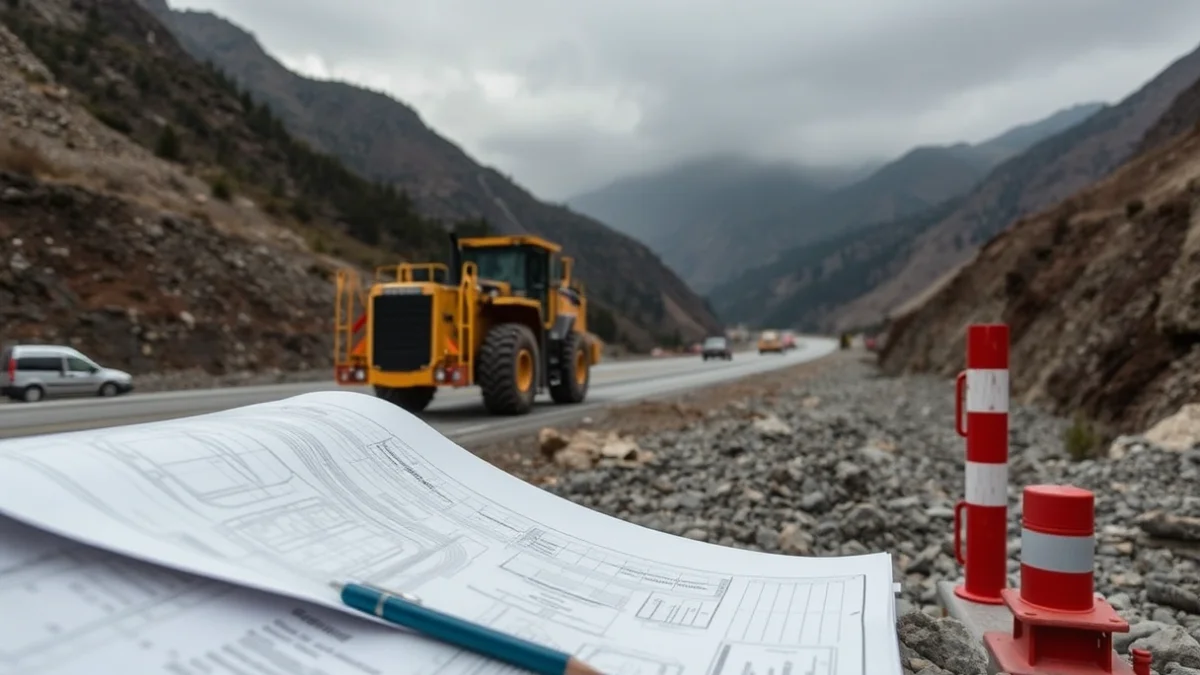
This action, valued at 280 million euros, is part of the management agreement signed with the Spanish Government for the improvement of the Pyrenean Axis. The goal is to execute the variant works, which will absorb 150 million euros, during the agreement's validity, until 2033. The study will analyze the viability of a new 6-kilometer corridor, including 2 kilometers of tunnel, to turn the N-260 into a key territorial backbone.
“"We are laying the foundations for solid growth, and today we reaffirm our commitment to the Pyrenees, a territory that must be at the center of Catalonia's prosperity."
The investments were announced during a conference in Tremp featuring ministers Albert Dalmau and Òscar Ordeig, and also include improvements to other road axes. On the Eix de Comiols (L-512), conditioning works worth 22 million euros have been tendered, set to begin this autumn. Regarding the C-28 (Pallars Sobirà - Val d’Aran), 10.5 million euros will be invested to widen the route in Sorpe (Alt Àneu) and 3 million euros for avalanche protection measures at the Port de la Bonaigua.
In addition to road infrastructure, the Government has unlocked the deployment of the public fiber optic network along the Pyrenean Axis (N-260) thanks to an agreement with the Ministry of Transport and Sustainable Mobility. The project for the first section, between Puigcerdà and La Seu d’Urgell (47 km), is expected to be drafted by March. This comprehensive strategy is complemented by the creation of a new IRTA center in the High Pyrenees, scheduled for presentation on February 19 in La Seu d’Urgell.
“"This new center is a unique opportunity for the High Pyrenees, as it will become a link between the productive sector, the scientific community, and the administrations."