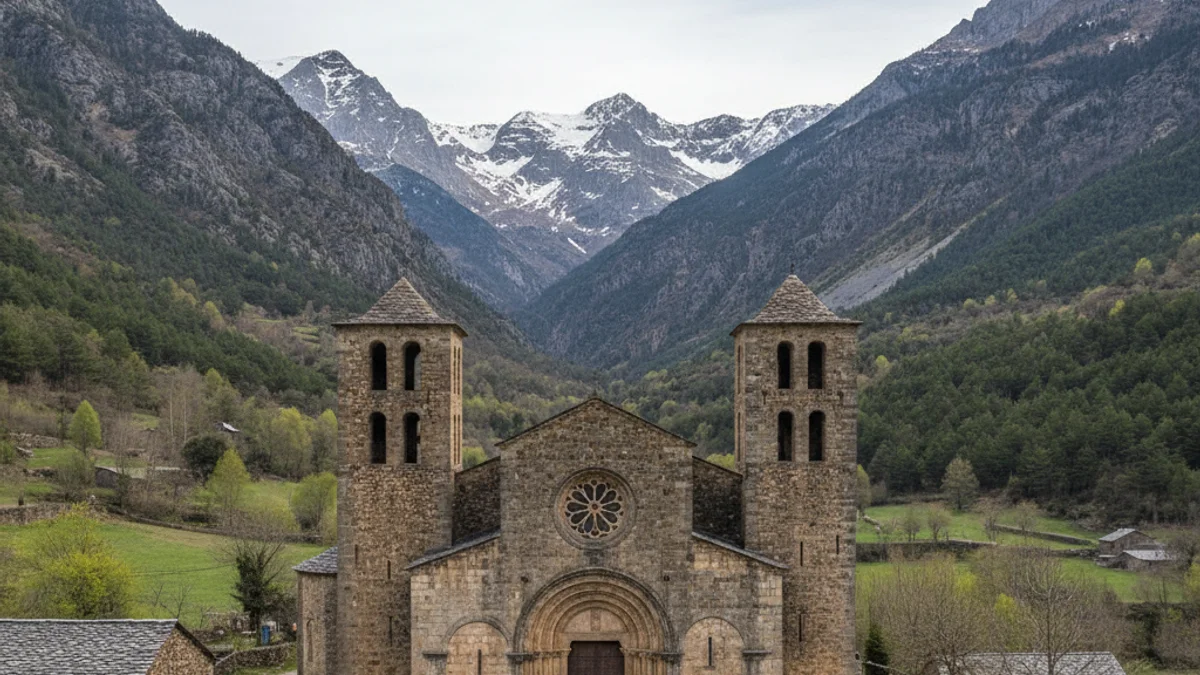
The agreements directly affect the churches of Sant Climent de Taüll and Sant Feliu de Barruera, located in Alta Ribagorça, and the church-monastery of Santa Maria de Gerri de la Sal, in Pallars Sobirà. This cession, lasting 60 years, reinforces the “conservation, restoration, and highlighting of heritage assets of high historical and cultural value,” as reported by the ministry in a statement issued this Friday.
The agreement guarantees the continuity of the celebration of Catholic worship in the churches of the Vall de Boí, a characteristic element of their inscription as Cultural Heritage.
Regarding the temples in the Vall de Boí, owned by the Bishopric of Urgell and part of the World Heritage Consortium, the cession of use agreement allows the Consortium to continue performing restoration and maintenance functions. Furthermore, this new situation makes it possible to promote new investments and qualify for the 2% Cultural Program, assuming the ordinary maintenance of the buildings and the realization of cultural activities compatible with their religious character.
The second agreement focuses on the church-monastery of Santa Maria de Gerri de la Sal, declared a National Cultural Asset of Interest and also owned by the Bishopric of Urgell. In this case, the management of the heritage asset will be jointly assumed by the Baix Pallars City Council and the Catalan Agency for Cultural Heritage, which is under the Ministry of Culture.
The planned actions in Gerri de la Sal aim to ensure the preservation of the complex and promote its dissemination, as well as encourage its cultural, social, heritage, and spiritual use, “for the benefit of the territory and the local community.” The Church will continue to have access to this temple for liturgical celebrations, as has been the case since its consecration.