This investment effort seeks to reverse decades of neglect that have caused grievances regarding connectivity in the region, a constant concern for local mayors. Infrastructure improvement is vital both for residents' access to basic services and for enhancing the competitiveness of local businesses.
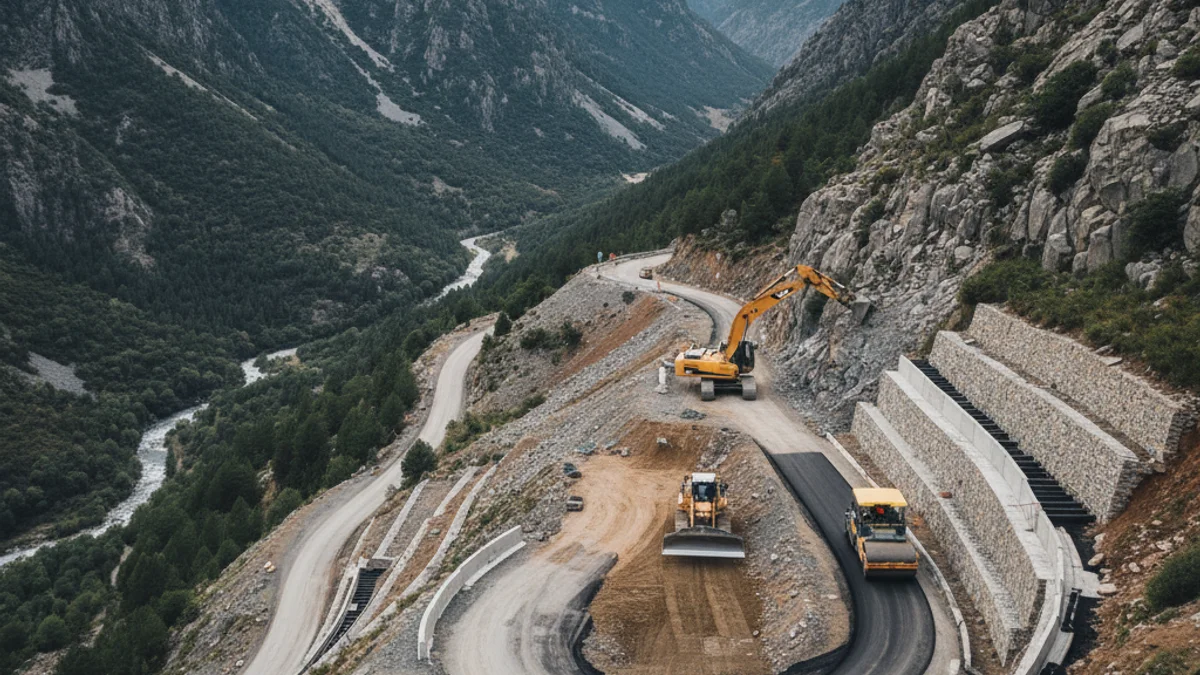
One of the largest projects is the comprehensive upgrade of the Pyrenean Axis (N-260) between Xerallo and Pont de Suert. The information and environmental impact study is already being tendered, with an estimated budget of 280 MEUR for the 21 kilometers of the section. Proposed alternatives include a tunnel bypass option, accelerated through a management agreement with the State.
In parallel, the Government has tendered the conditioning of the L-512 road (Comiols Axis) between Pont d’Alentorn and Vall-llebrera, with an investment of 22 MEUR. Works will commence in the autumn, continuing the Artesa de Segre bypass. Regarding the C-28, connecting Pallars Sobirà with the Val d’Aran, avalanche protection measures will be applied at Port de la Bonaigua, and a widening study will begin for the section passing through Sorpe (Alt Àneu), with 10.5 MEUR allocated.
Connecting the Pyrenees is a long-standing demand. Decades of lack of investment have accumulated many grievances, and we know it is a major challenge.
In addition to road infrastructure, digital connectivity is receiving a definitive boost. The Generalitat has reached an agreement with the Ministry of Transport and Sustainable Mobility to unlock the deployment of the public fiber optic network along the 470 km of the Pyrenean Axis. The first construction phase, covering 47 km, will run between Puigcerdà and La Seu d’Urgell.