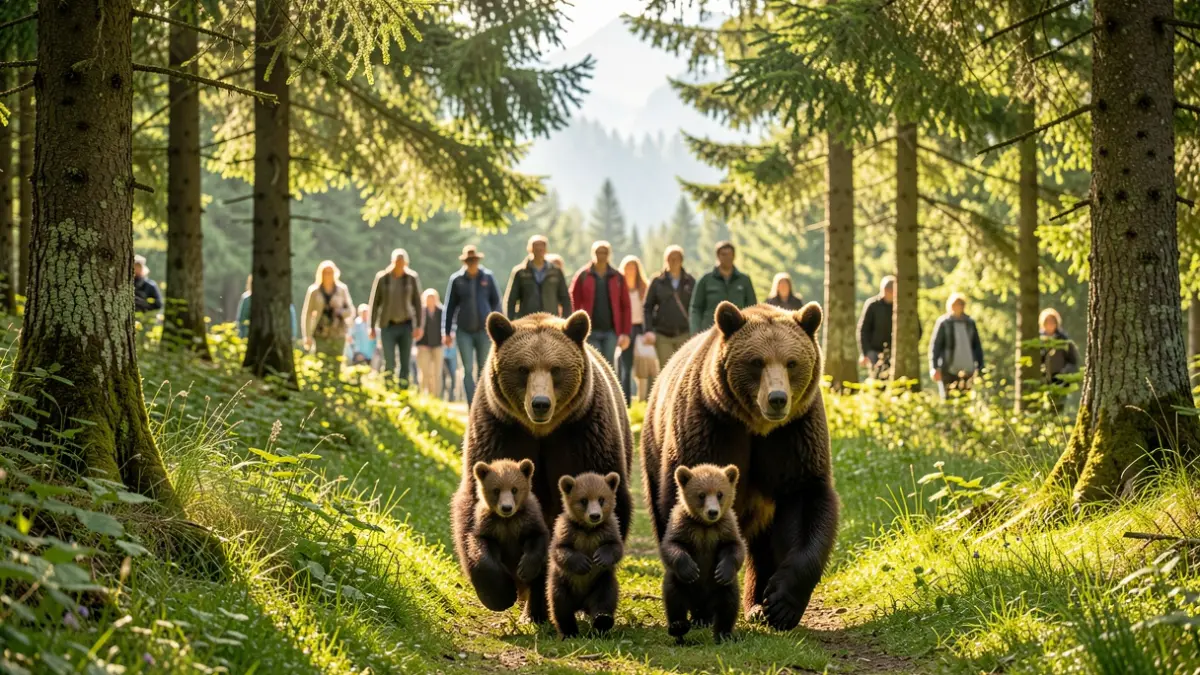
The Val d'Aran has been the scene of an exceptional event for Pyrenean wildlife: the monitoring of two brown bear families, totaling eight individuals, with two mothers each carrying three cubs. This marks the first time such a situation has been documented in the Pyrenees, where two brown bear families have not been found in the same location at the same time.
The recordings, made during the spring between May and June, have allowed for the documentation of key aspects of these animals' biology, including their feeding habits, interactions between mothers and cubs, and their behavior with other species.
One of the families was monitored for 28 consecutive days. During this period, the group lost one of the cubs due to unknown causes, which, according to Depana, could be attributed to natural selection processes, illness, accident, or even death by a male bear.
The other bear family was located on five occasions in the same Val d'Aran. In total, during this timeframe, Depana and the Conselh Generau captured images of a dozen individuals.
These findings are part of a context of growth in the brown bear population in the Pyrenees. According to the latest data from the Generalitat, released in March, there are 108 identified bears in the mountain range, with 54 of them located in Catalonia.
The presence of the brown bear, a species endangered in Catalonia, is causing concern among livestock farmers. Last week, farmers in Pallars Sobirà reported three fatal attacks on their flocks, which they attribute to bears. The Generalitat has opened an investigation and currently attributes one of the attacks to the brown bear, while analyzing the other two cases.