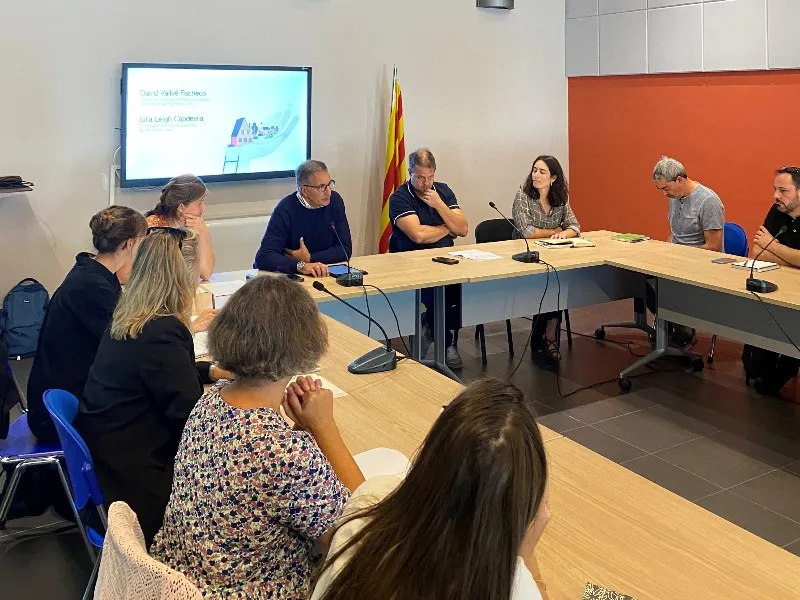
The initiative plans to consolidate the offices of eight Aranés municipalities, serving approximately 5,000 citizens. This model would allow for the integration of specialized justice administration personnel while preserving the role of local peace judges in each municipality. The first vice-consul of the Conselh, Francisco Bruna, confirmed that the proposal will be discussed at the next council of mayors. The municipalities involved would be Naut Aran, Bossòst, Les, Es Bòrdes, Vilamòs, Canejan, Bausen, and Arrès.
This proposal is part of the implementation of Organic Law 1/2025, which promotes the transformation of former peace courts into Municipal Justice Offices. These new offices are intended to become the primary entry point for citizens to the justice administration, progressively taking on new functions such as managing Civil Registry procedures, obtaining certificates, connecting with courts via videoconference, and accessing services like free legal aid or victim support.
The main objective is to bring justice closer to citizens and minimize travel, which is particularly relevant in territories with geographical dispersion and unique characteristics like the Val d'Aran, as highlighted by Minister Espadaler. Bruna emphasized the importance of preserving the role of the peace judge, proposing to enhance it with specialized technicians for daily support, which would be realized through the creation of the Office.
“"We are interested in preserving the figure of the peace judge in each municipality; grouping does not mean losing competence or this figure."
Espadaler advocated for the need to promote this model throughout the region, stating that groupings lead to increased efficiency and better service delivery. Municipal Justice Office groupings maintain the individual operational capacity of each office but allow the Department of Justice to assign specialized personnel to serve the integrated municipalities collectively, thereby strengthening available resources.
During the meeting, the minister also recalled that the Department offers translation services between Catalan, Spanish, and Aranese to guarantee linguistic rights. Espadaler noted the significance of Aranese in the justice system and stated that the Government, in conjunction with the Department of Linguistic Policy, will offer Aranese classes to public servants working in the Val d'Aran.