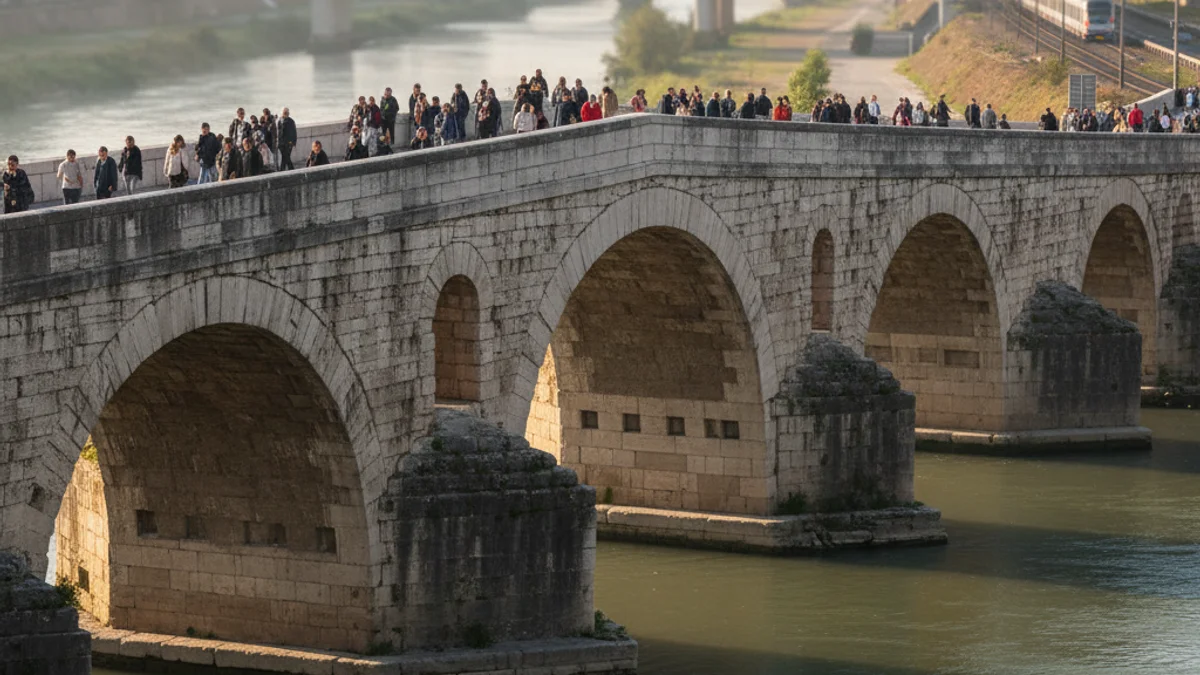
The project, funded with 412,369 euros by the Barcelona Provincial Council, focused on stabilizing the ancient structure. As a National Cultural Heritage site since 1925, the bridge required urgent intervention to fix loose stones and deteriorating Roman mortar.
Engineers used carbon fiber rods and lime-based mortars to reinforce the arch. To combat centuries of erosion, a copper protective layer was installed on the upper section to prevent water filtration. The surrounding area was also improved with the restoration of original Roman stone slabs near the Llobregat River.
Dating back to between 16 and 8 BC, the bridge remains a vital symbol of the Roman road network in Catalonia. Despite being flanked by modern highways, it continues to serve as a historical link between the Baix Llobregat and Vallès Occidental regions.