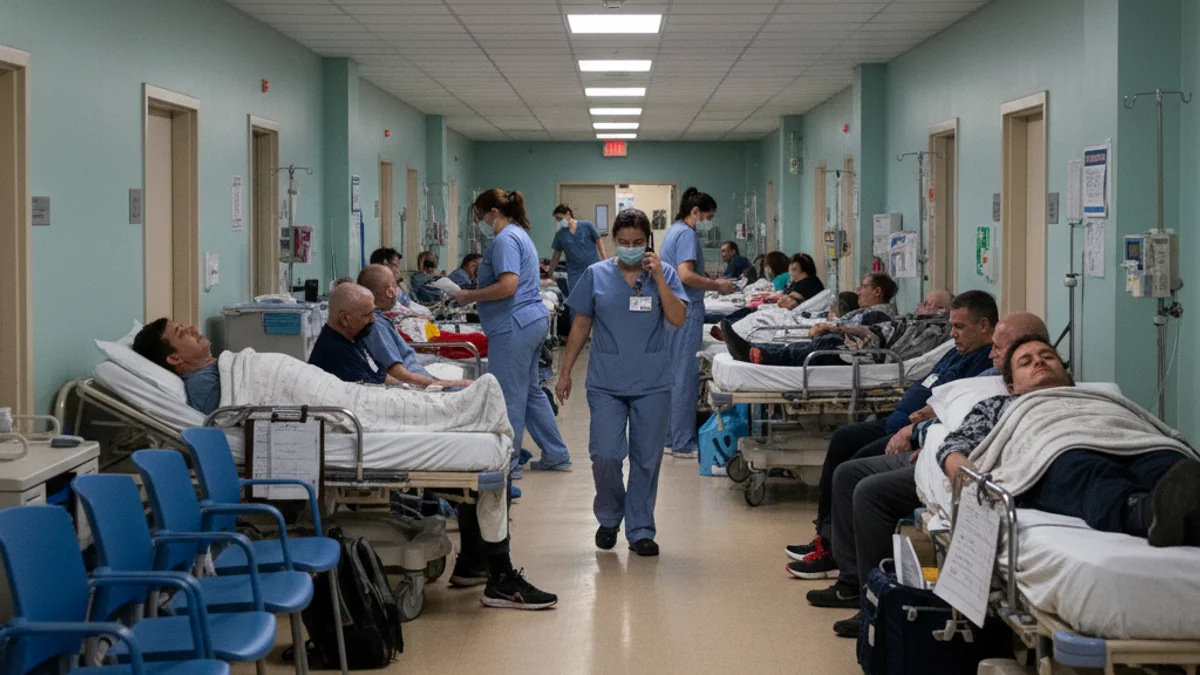
The rise in flu hospital admissions has exceeded the maximums recorded throughout the last season, according to SEMES. This situation led Dr. Javier Millán, Vice President of the scientific society, to insist on the urgent need to activate contingency plans, reinforce staff, and guarantee bed availability to prevent system collapse.
“"We are already in a very complex situation in many emergency services, with saturated waiting rooms, long delays, and patients awaiting hospitalization beds."
The CSIF union also demanded urgent reinforcements ahead of the imminent peak of respiratory infections. The union reports patients being treated in chairs due to lack of stretchers and emergency rooms receiving up to 800 people in a single day. For instance, the Hospital Universitario de Toledo attended 784 patients in one day, while some hospitals in Madrid have replaced chairs with beds due to overcrowding.
In Catalonia, SEMES reports a situation of “maximum intensity” in week 50, with a flu incidence reaching 764 cases per 100,000 inhabitants. CSIF denounces that all health center emergency rooms are saturated, with patients treated in corridors, and that reinforcements hired by the Catalan Ministry of Health are insufficient. However, the Catalan Minister of Health, Olga Pané, flatly denied the collapse and stated that flu contagions had been decreasing for two days.
Regarding the distribution of viruses, between 60% and 70% of cases correspond to Flu A, predominantly the H3N2 clade K variant. The increase in hospitalizations is concentrated in vulnerable populations, especially infants under one year old and people over 75 with comorbidities. The World Health Organization (WHO) confirmed that 27 out of 38 European countries are registering high or very high flu activity four weeks earlier than usual.