Vandellòs i l'Hospitalet de l'Infant, known for half a century for nuclear electricity generation with the Vandellòs I and II power plants, is preparing for a new energy transformation. The goal is to leverage its accumulated experience to lead the transition towards renewable energies.
This is the purpose of the Center for Innovation, Research, and Training in Efficiency and Renewable Energies (CIRFER). Promoted by the Generalitat's Directorate General for Energy and managed by the municipal company IDETSA, the center aims to make the town an energy benchmark in Catalonia and Spain.
The project, which requires final approval from the Generalitat for the planned investment of 6.7 million euros, seeks to attract companies, researchers, European funding, and create highly qualified employment. It is conceived as a "center for the country".
CIRFER will be structured around three main axes: research, training, and outreach. In the scientific field, the URV will lead projects such as the PV3C laboratory for photovoltaic technologies and the CNR-CiBaMeL center for lithium-ion batteries and electric mobility. It will also offer technological services to companies.
Training will include intermediate and higher vocational cycles in electricity, air conditioning, energy efficiency, and renewable energies, as well as professional certificates and continuous training. The initial projection is to train over 500 people annually, with the goal of exceeding a thousand when the center is at full capacity.
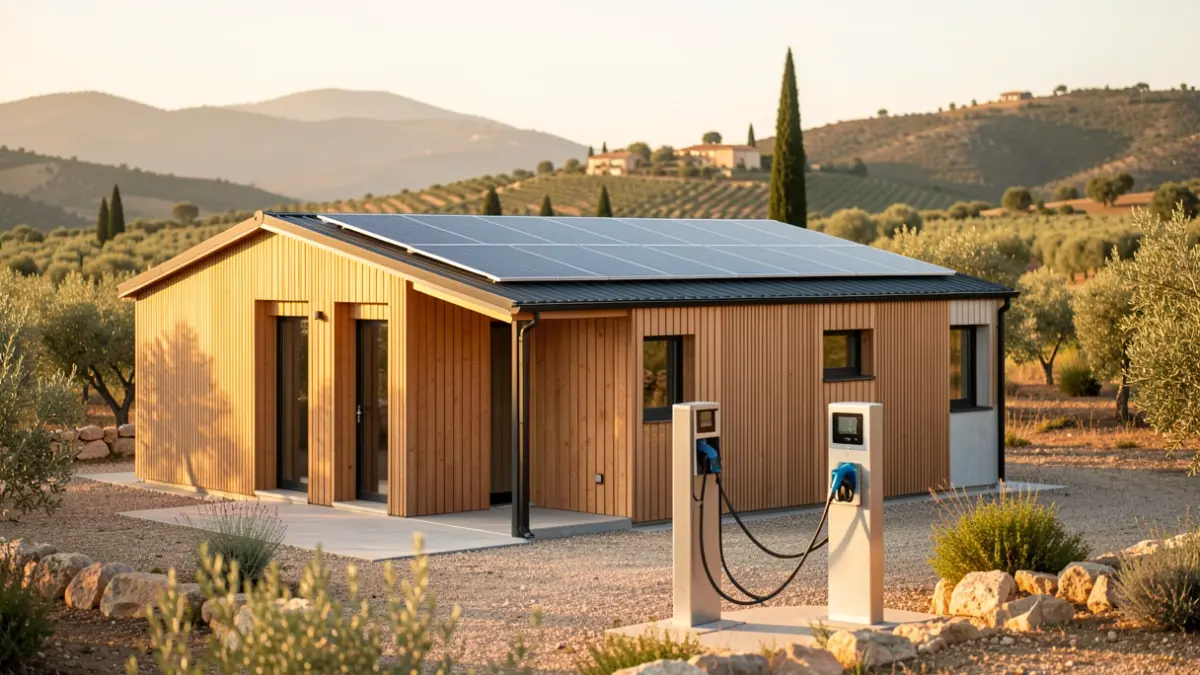
The outreach aspect will feature seven interactive showrooms on efficient homes, air conditioning, electric mobility, and water saving, among others. The 2,150 m² building will be modular, with nearly zero-energy consumption (nZEB), photovoltaic self-consumption, and ten charging points for electric vehicles.
The total investment of 6.74 million euros will be divided into two phases. The first (2026-2028) will allocate 3.89 million to construction and the launch of the first laboratories, while a second stage will complete the project with an additional 2.84 million. The Generalitat will contribute 45% of the funding, European funds 30%, the City Council and IDETSA 15%, and the remaining 10% will come from the private sector.
The initiative addresses the growing demand for specialized workers in the energy sector, where eight out of ten companies struggle to find qualified personnel. The growth of photovoltaic energy is projected to exceed 200% between 2025 and 2030.
Promoters estimate that the center will achieve financial balance from the first year, with projected revenues of 1.07 million euros in the first year, increasing to 1.64 million by the fifth. It will generate 14 direct jobs and over 40 indirect ones, attract 2.2 million in competitive European projects, and produce an estimated social return of 2.5 million annually.
The administrative launch is scheduled for 2026, with the tender for works. Construction will take place during 2027, and teaching activities and the first laboratories will begin in 2028. Consolidation and full operation are expected from 2029 onwards.