The Eiffel Tower, a symbol of Paris, is an engineering masterpiece designed by Gustave Eiffel. This renowned French engineer not only left his mark on the French capital but also carried out various constructions in Catalonia, including railway bridges and urban garages. In the city of Reus, his influence can be seen in the old garages of the current Espai Boule and in the Pedrell family building, now known as Espai Mil Nou.
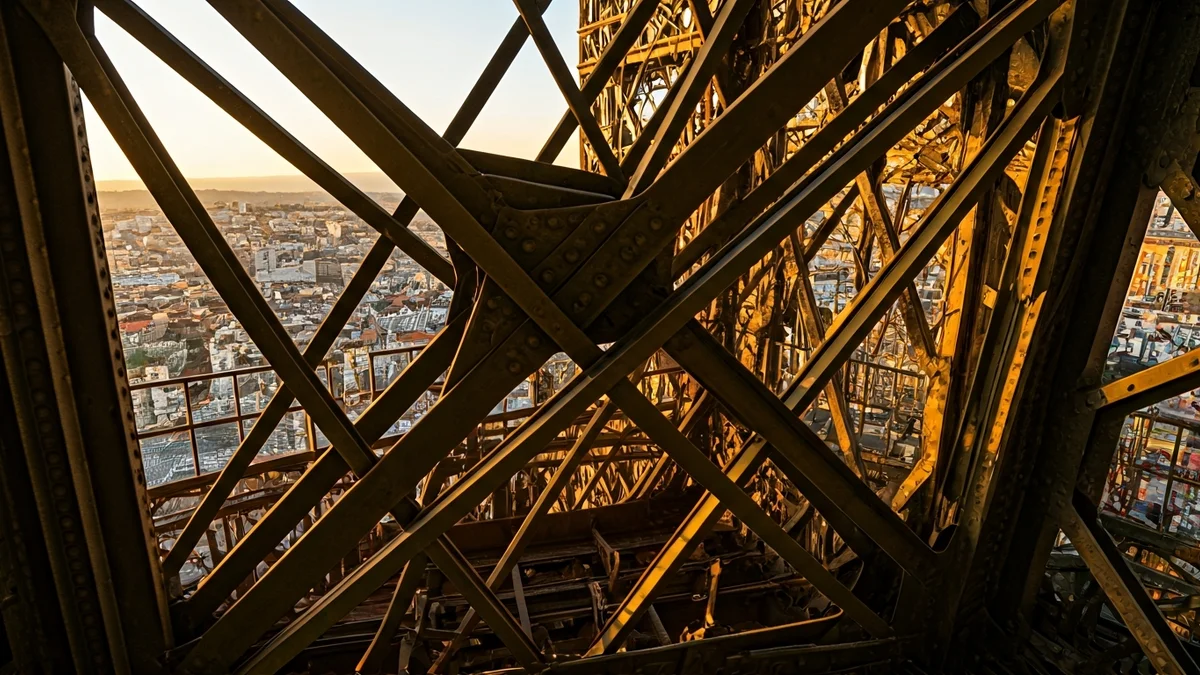
Beyond its iconic panoramic views of Paris, the tower's internal structure reveals an ingenious design. Intimate photographs of its interior show the famous 'gavarrots' (girders) and crisscrossing structures that distribute loads with reduced weight, while also allowing wind to pass through. This engineering concept was crucial for withstanding the strong air currents that reach its 300-meter height.
At the time of its inauguration, the Eiffel Tower was the tallest building in the world, a title it held until the construction of the Chrysler Building in New York in 1930. A little-known detail is that its original color was 'Venice red,' very different from the current dark brown, which has been recently repainted. Images of its 'inner workings' allow appreciation of the journey up the stairs and its elevators, offering a unique perspective of a monument that was initially conceived as a temporary construction for the centenary of the French Revolution in 1889, but was ultimately preserved, becoming Paris's most recognizable symbol.
Interestingly, there was a previous project for an 'Eiffel Tower' in the United States, called The Centennial Tower. This tower, also intended to be 300 meters tall, was meant to commemorate the centenary of the United States Declaration of Independence at the Philadelphia Universal Exposition in 1874. However, American engineers failed to bring the project from blueprint to reality, unlike Gustave Eiffel, who demonstrated the technique, capacity, and talent necessary to complete his masterpiece in Paris.