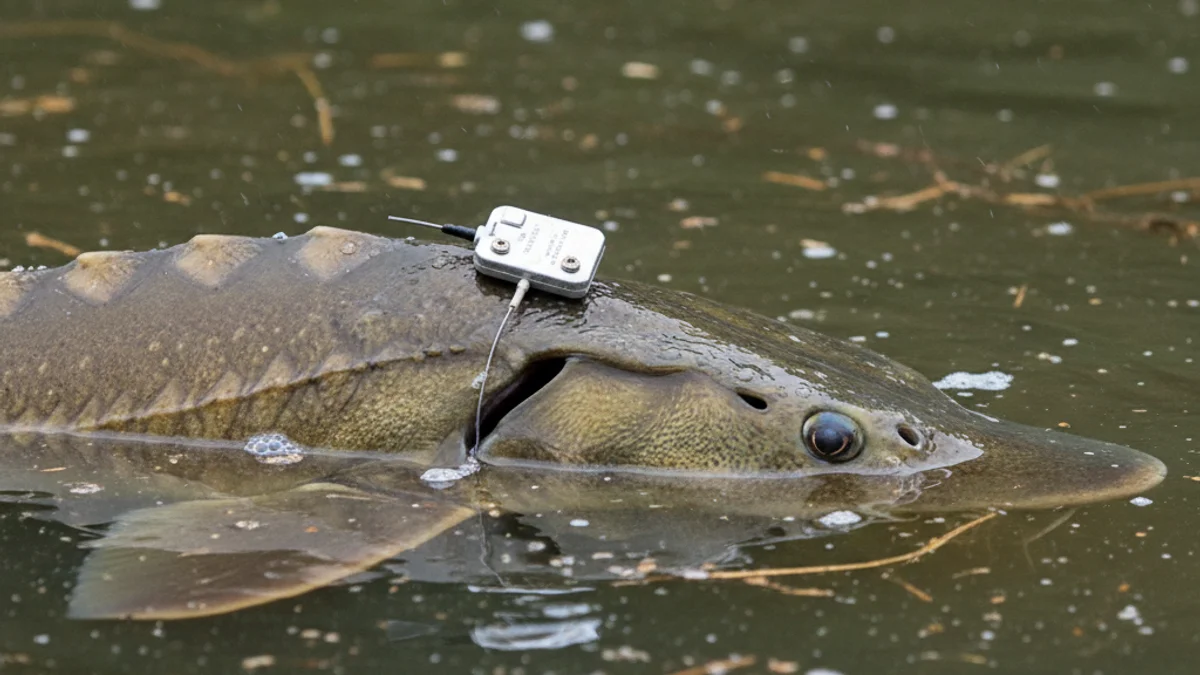
The fish were part of the sturgeon reintroduction program in the Ebro River, a species that became extinct due to human action. For three years, the project has promoted the release of specimens at the beginning of winter to analyze their behavior and adaptation to the environment.
One of the sturgeons, equipped with tracking devices, was found by fisherman Xavi Pozo in Fangar Bay, who alerted the Rural Agents. The other specimen was located in Peníscola by fisherman David Pozo. The IDECE acknowledged their action, even though both sturgeons were found dead.
“"The information provided by the fishermen is key to analyzing the species' behavior and evaluating the program's operation."
The project is supported by the Center for Mediterranean River Studies (CERM) at the University of Vic and the Delta de l’Ebre Natural Park. The project's scientific coordinator, Marc Ordeix, emphasized the importance of understanding sturgeon movements and the factors that may affect their survival.
The IDECE reminds the public that sturgeon fishing is prohibited, but accidental fishing does not result in penalties. Therefore, they call for cooperation from the fishing sector to report any sighting, considering this collaboration essential for advancing conservation efforts.