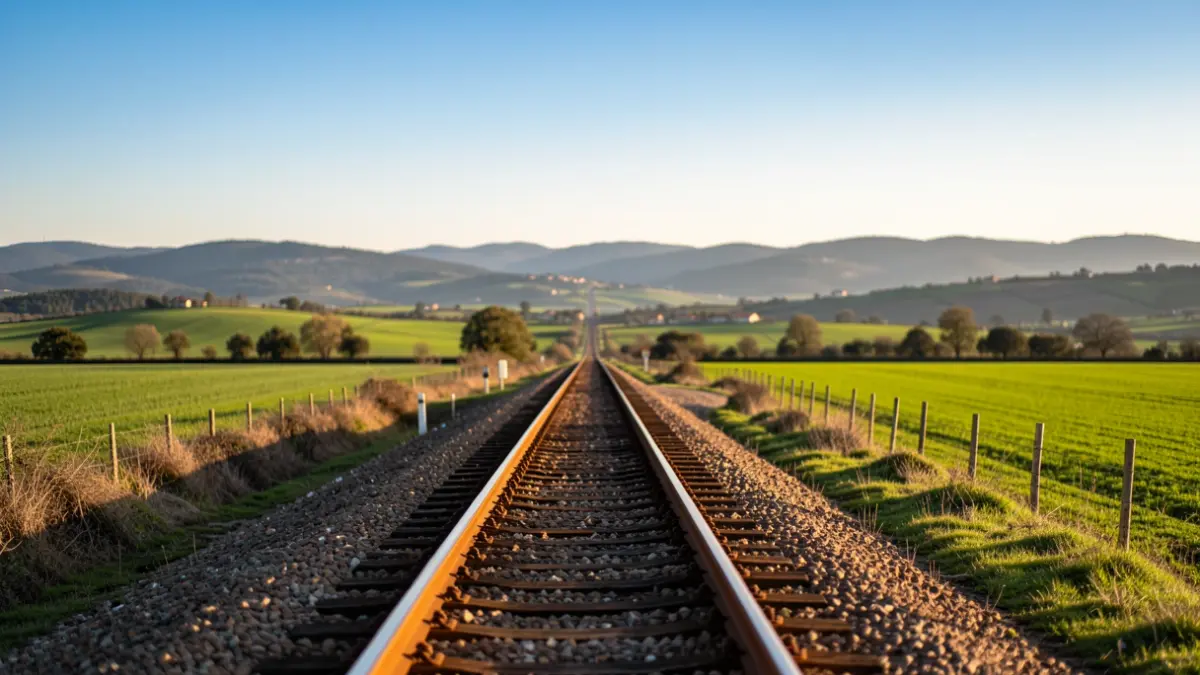
The association Trens Dignes has expressed concern over the lack of tangible progress in strategic railway infrastructure for the Terres de l'Ebre and Priorat regions. They are calling for projects like the Ebro tram-train and the L'Aldea intermodal station to be specified and provided with the necessary budget for their execution, fearing that feasibility and acceptance studies will end up as "wasted paper" and "public expense" without return.
The platform denounces an accumulation of mobility and infrastructure studies in the territory that fail to materialize. Furthermore, they warn that the R15 line continues to suffer significant disruptions, with frequencies experiencing delays or forcing users to take replacement buses, despite the recent partial reopening.
Trens Dignes is calling for greater institutional pressure to ensure these strategic projects do not stall. Despite the approval of a motion in the Parliament by ERC that addresses historical demands, and the support from the Tortosa Municipal Action Plan for the tram-train, the organization considers territorial consensus essential to prevent the tram-train project from getting stuck again, as has happened previously.
The platform also regretted that Junts did not accept incorporating an amendment from Comuns regarding the L'Aldea-Amposta-Tortosa intermodal station into the parliamentary motion. Additionally, they question the decision by the L'Aldea City Council to promote a bus interchange near the AP-7 access, while the feasibility of the railway intermodal station, located just over a kilometer away, is still under study.
“"We understand that buses are essential for the Terres de l'Ebre, but from that to accepting a bus stop or interchange a kilometer and a half from where an intermodal station is being studied, it raises many questions for us."
The spokesperson for Trens Dignes, Cinta Galiana, finds it contradictory to want to execute one infrastructure now while studying the feasibility of another nearby in the future. This situation creates uncertainty about long-term planning.
Regarding the current railway service, the platform denounces that the R16 line continues to experience delays and that the single Avant service is insufficient to cover mobility between the Terres de l'Ebre and Barcelona. They are requesting an additional Avant frequency, the restoration of semi-fast trains, or for trains like the Euromed to resume stopping at L'Aldea.
The situation of the R15 line also causes concern. Spokesperson Mireia Muniesa Vilanova recalls that railway circulation between Riba-roja d’Ebre and Móra la Nova has not yet been fully restored, forcing many travelers to continue using replacement buses. According to Muniesa, users suffer numerous delays and limitations, prompting them to seek road transport alternatives due to the unreliability of the railway service.
Galiana has advocated for joint mobility planning in the Terres de l'Ebre, coordinating buses and trains, and requesting support for the tram-train project in regions like Terra Alta or Ribera d’Ebre. She argues that deficient communications hinder population retention and the keeping of young people in the territory, comparing the situation to developed countries where living in rural areas is more feasible.