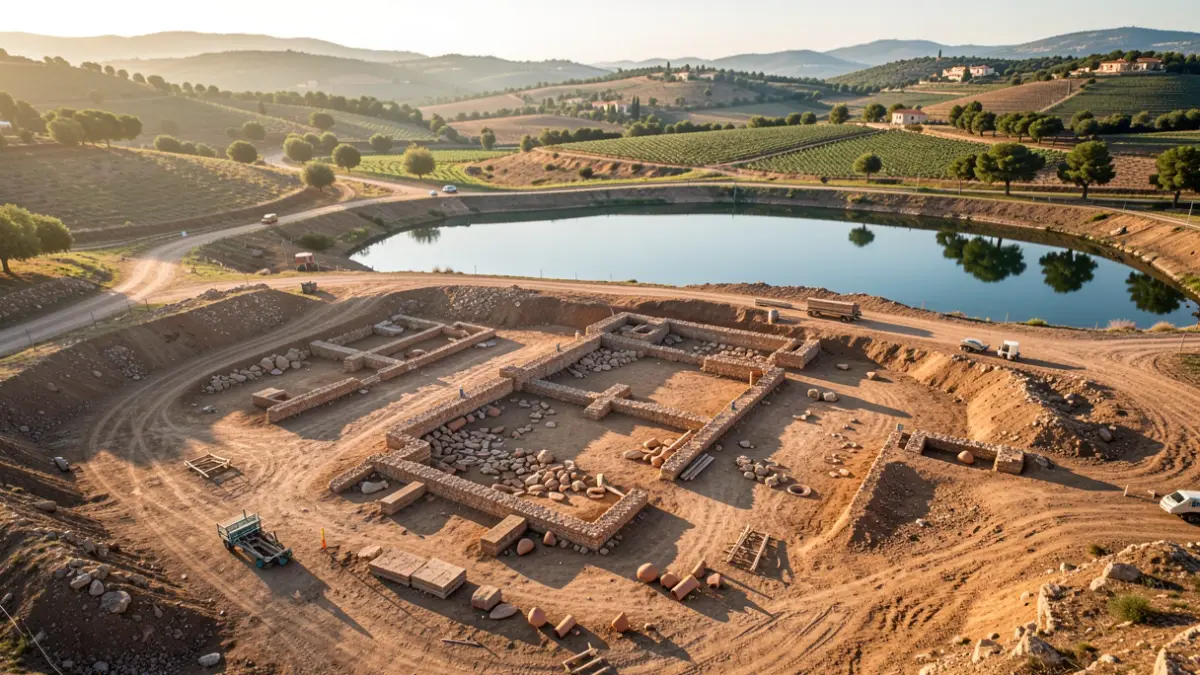
Archaeological interventions near the settlement of Illa d'en Reixac, in an area previously considered uninhabited, have revealed habitat remains and structures from the early Iron Age and the Iberian period. These discoveries suggest that inhabited areas extended beyond the known nuclei of Puig de Sant Andreu and Illa d'en Reixac.
Among the most significant findings is a complete hut base from the early Iron Age. This marks the first time an archaeological site of this period has been documented in its entirety around Ullastret using modern archaeological methods, despite earlier indications at sites like Puig de Sant Andreu, Illa d'en Reixac, and Puig de Serra.
These remains were unearthed during modernization works on the irrigation systems for the communities of the Colomers dam and the Molí de Pals canal.
The archaeological efforts have also identified new findings in Llabià, la Tallada d’Empordà, Bellcaire d’Empordà, and l'Escala. These include a potential funerary space and early medieval habitat in sites with continuous occupation since the late Neolithic, as well as lime kilns and new areas near Empúries.