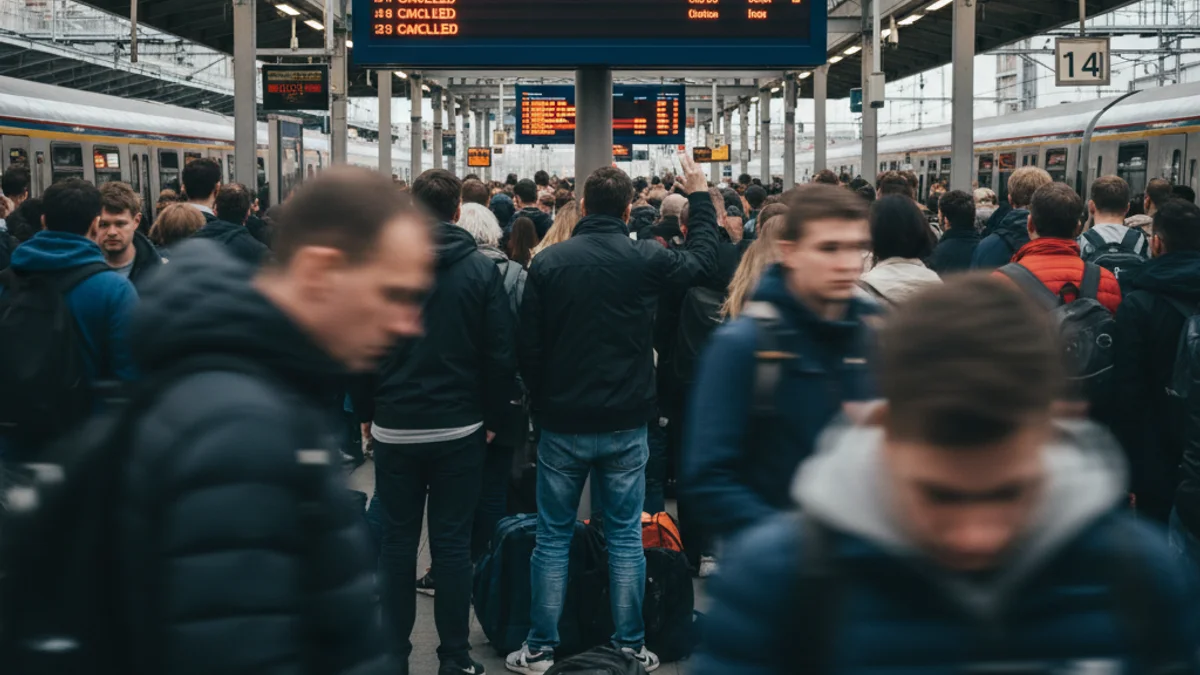
The protest, called by railway unions, includes Rodalies, regional, high-speed, and freight services, and will extend until the early hours of Thursday morning. The main goal is to demand safety and working condition improvements across the railway system. Although major unions like Semaf, CCOO, and UGT might call off the strike, minor unions could still proceed with the mobilization.
“"If the strike is called off at eleven at night, the system does not have the material time to react and put all the trains it should have on a normal day."
The mandated minimum services guarantee 66% of trains during peak hours (6 to 9 AM and 5 to 9 PM) and 33% during off-peak hours. However, practically, this results in very low frequency, guaranteeing only one train per hour on Rodalies lines R1, R2, and R4. Lines R3, R7, and R8 remain closed, maintaining the usual bus replacement services.
This stoppage follows more than two weeks of severe disruption. Just this Saturday, the R4 service between Martorell and L'Hospitalet de Llobregat was resumed after the landslide in Sant Feliu de Llobregat. Despite the partial recovery of lines like R13 and R14, several sections remain cut, and generalized delays of over 20 or 30 minutes were common this Saturday.