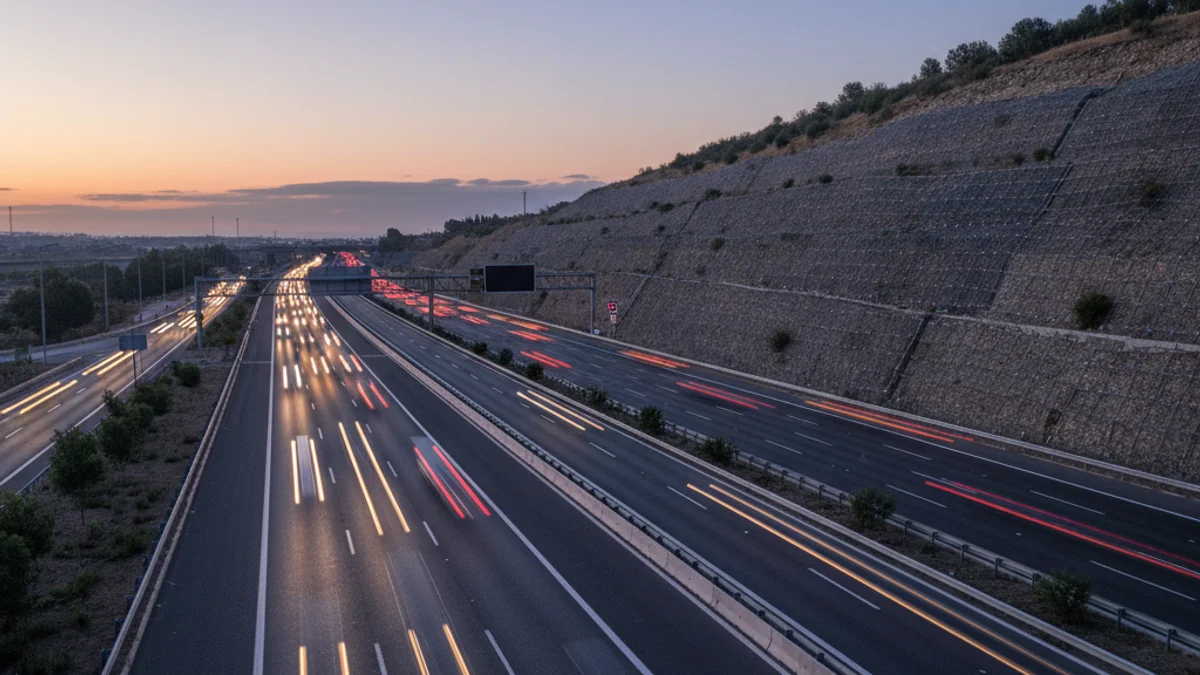
The total reopening occurred exactly at 3:00 a.m. after the Ministry of Transport and Sustainable Mobility completed intense stabilization work on the slope damaged by the storm and the railway accident. This section is one of the most heavily traveled road axes in Catalonia, used by over 100,000 vehicles daily.
The closure originated on January 20 when heavy rainfall caused a retaining wall to collapse onto an R4 Rodalies train near Gelida, resulting in the death of the train driver and injuries to around thirty passengers.
The director of the Servei Català de Trànsit (SCT), Ramon Lamiel, highlighted that the diversion plan and constant information helped mitigate congestion during the affected period.
“"An incident of this magnitude on the AP-7 cannot be completely resolved, and therefore it has had inevitable consequences."
Despite the AP-7 regaining full capacity, morning rush hours saw the usual traffic jams on access roads to Barcelona, particularly on the C-31 (in El Prat), the C-32 (between Gavà and Sant Boi), and the A-2 (between Sant Andreu de la Barca and Cornellà) due to ongoing B-25 construction works.