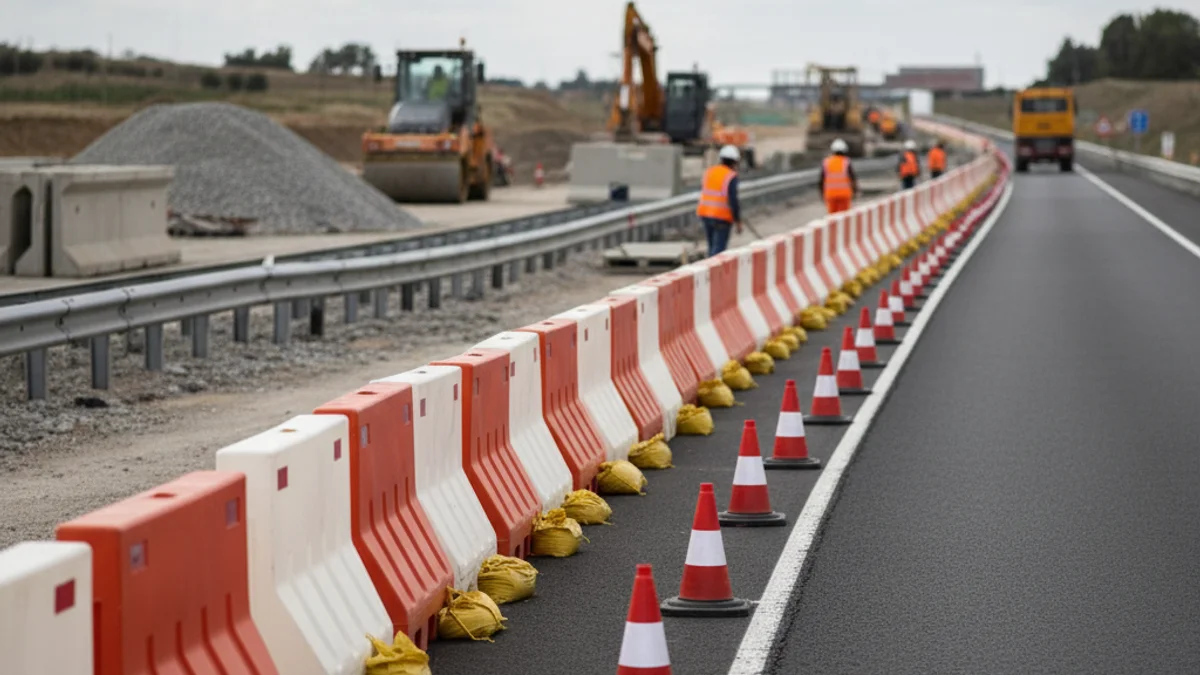
The opening, located at kilometer 177, corresponds to the lane furthest from the point where the embankment collapse occurred, which triggered the railway accident in Gelida. Technicians from the Ministry of Transport confirmed that it is "perfectly safe" to reopen it, as the collapse happened on the exterior part, not the motorway surface itself.
“"The motorway is safe, and that is why we can open it. The left lane is especially safe after the explanations they have given us and seeing all the images."
The other two right lanes of the AP-7 southbound will remain closed for necessary repairs. The Director General of the Servei Català de Trànsit (SCT), Ramon Lamiel, indicated that the full opening is a matter "of days" but urged drivers to continue using alternative routes to avoid a "bottleneck effect" in the Martorell area.
The traffic closure began on Wednesday afternoon due to the instability caused by the retaining wall failure, which resulted in one fatality and 37 injuries in the train accident. Lamiel explained that the 2:00 PM time slot was chosen to avoid the peak of the weekend departure traffic.
Since the closure, traffic on the C-32 motorway has doubled, increasing from 60,000 to 120,000 vehicles daily. Consequently, tolls on the C-32 remain lifted, and the use of free alternative routes, including the N-340 and the A-2, is recommended. The partial reopening also allows the transport of hazardous goods to return to the AP-7.