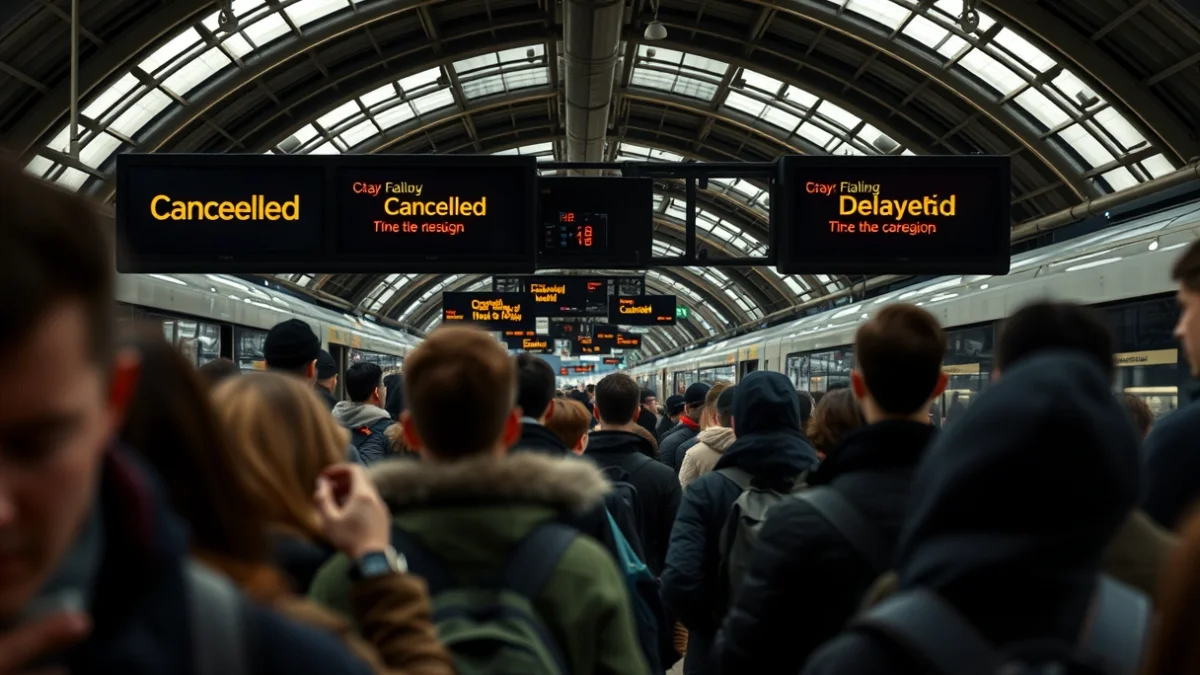
According to Renfe data, only 36.4% of the stipulated trains circulated nationwide during the first day of the strike. The impact was most severe in the Barcelona area, where only 33% of minimum services were met, with 73 out of 222 scheduled trains running. This contrasts with figures from unions like UGT, which claim that the programmed minimum services are being fulfilled.
“"The right to strike is a fundamental pillar of the democratic system, but the right to mobility is too."
Cancellations affected all Rodalies lines, Regional services, and high-speed rail (including operators like Iryo and Ouigo). In Lleida, the cancellation of an Avant train early in the morning left nearly 400 people stranded. Users complained about the lack of information, with trains “disappearing from station screens.”
“"What we want are safe trains, dignified trains, and what we ask for is very clear: investment in infrastructure, in railway maintenance, and expanding staff, both at Renfe and Adif."
The strike occurs amid an unprecedented railway crisis, with the network affected by speed restrictions and recent closures, such as the R4 line in Sant Feliu de Llobregat. Workers primarily demand the recovery of safety standards following the accidents in Adamuz and Gelida, where 47 people died.