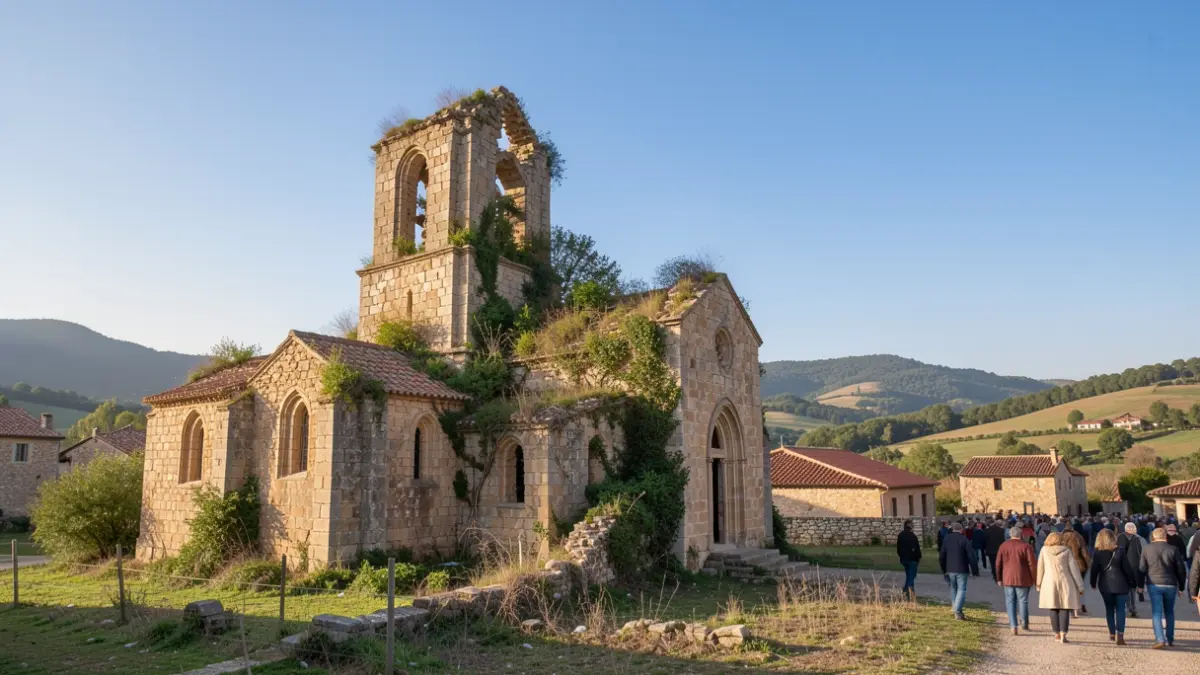
The recent incorporation of Sant Pere de Romaní into the municipal heritage, following the purchase of the architectural complex and adjacent land, facilitates the planning of necessary actions to conserve it and recover its historical and architectural values. The Master Plan, developed by a multidisciplinary team led by architect Montserrat Cucurella, sets out the intervention criteria and work phases to guide its rehabilitation and study potential cultural uses.
The first part of the document analyzes the general condition of the monument, which is rated as regular. Key issues identified include leaks and degradation of roofs and walls, as well as structural problems, particularly concerning the tower. Deficiencies in facilities and accessibility, and the need to improve paths and the landscape environment are also highlighted.
The document proposes four main areas of action: Historical, documentary, and archaeological research, to expand knowledge of the complex; Architectural and constructive conservation, to assess stability and restore roofs and facades; Functional adaptation, exploring uses compatible with conservation such as visits and cultural activities, including the proposal to turn the tower into a viewpoint; and Landscape integration, by conditioning access, paths, and discreet exterior lighting.
The Master Plan organizes the execution actions into four stages to prioritize interventions and facilitate economic planning. The first stage includes preliminary studies and urgent actions; the second, conservation and restoration; the third, adaptation for uses; and the fourth, external interventions. The plan also incorporates an estimated economic valuation and an indicative temporal plan.