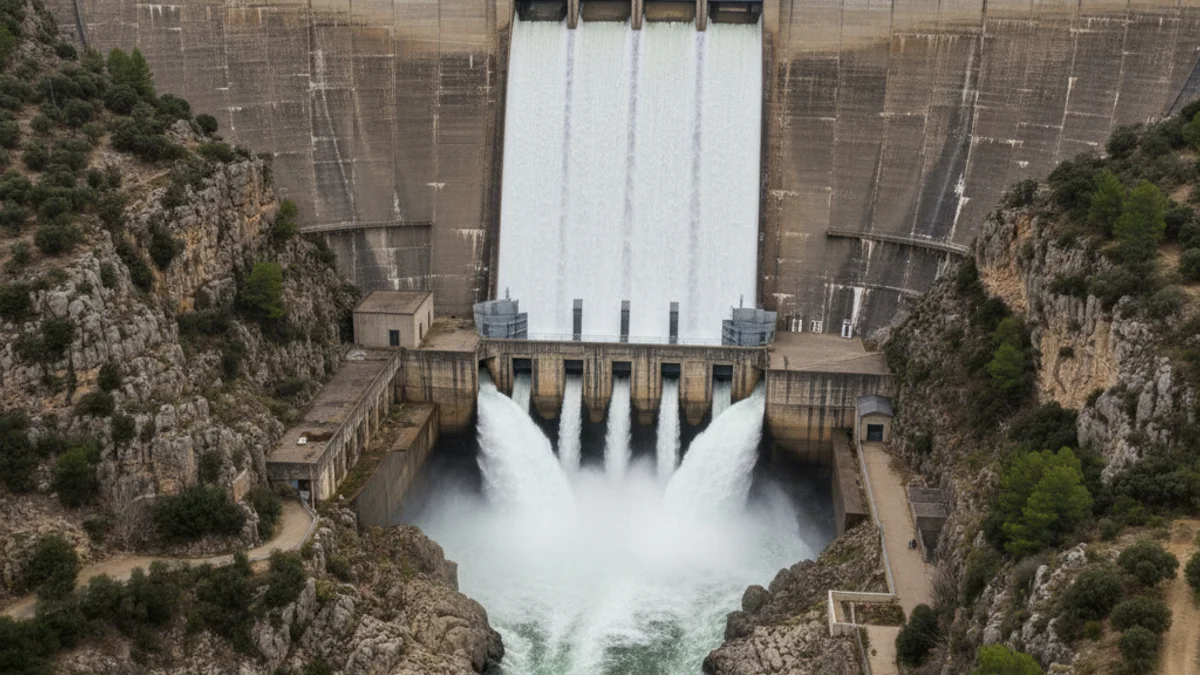
The current reservoir levels, figures not seen since the Gloria storm in January 2020, contrast sharply with the historic three-year drought. This abundance has led to increased water release from major reservoirs like Susqueda (96%) and Sau (89%), which are currently discharging significantly higher volumes than usual, reaching up to 60 m³/s.
The Mediterranean climate presents this duality between droughts and torrential rain episodes, but with the effects of climate change, these two extremes are becoming accentuated.
According to Meteocat data, the 2025-2026 winter has been the wettest since 1995-1996. Stations such as Granollers (Vallès Oriental) recorded nearly 308 l/m² between December and January, a 76-year record. Furthermore, the Pyrenees have exceptional snow depth, with over three meters in areas like Port Ainé (Pallars Sobirà), promising significant water input during the spring thaw.
Despite the positive situation, the Agència Catalana de l'Aigua (ACA) stresses the need to reduce dependence on rainfall. The agency plans to invest in infrastructure to secure 280 hm³ of new resources over the next five years through desalination and regeneration, including the expansion of the Trinitat Besòs water treatment plant and the Sant Feliu de Llobregat Water Regeneration Station.